
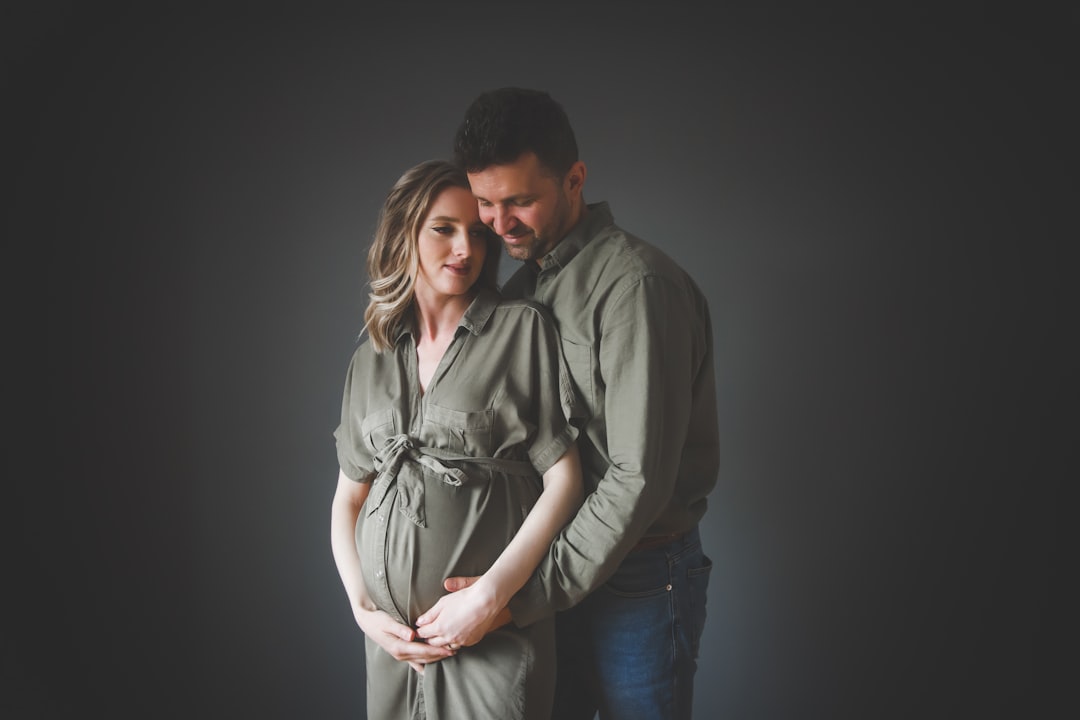
A surrogate parent maternity session has three principal subjects, not one — the surrogate carrying the pregnancy, and the intended parent or parents whose family is being formed. The choreography, the consent flow, and the gallery delivery all shift to accommodate that triangle. This guide covers how to structure the booking conversation, how to plan the day for everyone’s comfort, where the surrogate sits in the visual story, how to split deliverables when both parties want their own gallery, and the small editorial choices that make a surrogate parent maternity session feel like a respectful collaboration rather than a transactional shoot.
TL;DR
- Three subjects need three sets of preferences — gather them all before drafting the shot list.
- Consent is rolling, not one-time; check in at booking, at session start, and before any tender frame.
- Gallery splits are common: an intended-parents gallery, a surrogate gallery, and sometimes a small shared set.
- The surrogate’s family — partner, children — may want frames too; ask early so the schedule fits.
- Frame the session as a collaboration; avoid framing the surrogate as a “vessel” or as the hero.
Why surrogate parent maternity sessions need their own playbook
A standard maternity session photographs an expectant parent, sometimes with a partner and sometimes with older siblings. The relationships are clear, the gallery audience is one household, and the deliverable goes to the people in the frame. A surrogate parent maternity session is structurally different: the person carrying the pregnancy and the people whose child is being born are usually two separate households, sometimes living in different cities or countries, and the gallery audience splits accordingly.
The pregnancy is also a deliberate, contracted arrangement, not a private surprise. Intended parents have often been on a long path — fertility treatment, miscarriage, gestational complications, or a same-sex family-building journey. Surrogates have undergone medical screening and a structured matching process. By the time the maternity session is booked, the relationship between intended parents and surrogate has its own texture — close in some cases, polite-and-professional in others, geographically distant in others. The session has to fit whichever relationship the families have, not impose a friendliness they have not built.
The booking conversation
The first call should include both parties — intended parents and surrogate — even if intended parents are paying. A three-way call signals from the start that the surrogate is a subject, not a logistic. If geographic distance makes a joint call hard, two short calls can substitute, but the surrogate’s voice has to be in the planning, not relayed through the intended parents.
The questions that matter most. How visible does each party want the surrogate to be in the gallery — central in some frames, supporting in others, only in private images, or absent entirely? Does the surrogate’s own family (partner, children) want frames too? Are there cultural or religious sensitivities for either household — Orthodox Jewish surrogacy arrangements, for instance, often have specific framings around the surrogate’s modesty in images. Are there legal sensitivities — in some jurisdictions, surrogacy is heavily regulated and public images need handling care. Where will the gallery be shared — private only, social media, the photographer’s portfolio? Each household answers separately for its own permissions.
Run the call yourself rather than handing a form. The form misses tone and follow-up; the call gives you a sense of the relationship between the two households and shapes the day’s pacing.
Three-way session etiquette on the day
The session day has three subjects to orient and one photographer running the day. A few etiquette points carry weight.
Greet everyone equally. When the families arrive, greet the surrogate first or simultaneously with the intended parents. The surrogate is the person whose body is being photographed; greeting her secondarily signals her body is a backdrop. Equal greeting is a small thing that registers.
Address the surrogate directly when posing her. “Place your hand here, slow breath in” — to her, not relayed through intended parents. The intended parents are a third party in the posing direction, not a translator.
Ask before tender frames. A frame of the intended mother resting her forehead on the surrogate’s belly is intimate and beautiful when both want it; it is an invasion when one was unsure. Ask each pose category before moving to it: “We’re going to try a hands-together frame on the bump — is that okay with everyone?” The check is short, and the consent it produces is meaningful.
Run pauses by the surrogate’s pace. She is the one carrying the pregnancy; her fatigue threshold sets the schedule. Build in seated pauses every 25-30 minutes, with water and a chair available within 10 seconds of any shooting position.
Watch the dynamic. Some intended-parent and surrogate relationships are warm and physical from the first frame. Others are warm but more reserved. Do not direct an intimacy level the families have not chosen for themselves. If the intended father has met the surrogate three times in person, asking him to embrace her on camera may not match how they actually feel toward each other.
The visual structure of the session
Three formats cover most surrogate parent maternity sessions.
Surrogate-centred frames. The surrogate alone with the bump, photographed with the same care as a standard solo maternity portrait. Used when both parties want to honour the surrogate’s role visually as a primary part of the story. Often paired with a separate intended-parents-only set — couple portraits without the surrogate, sometimes with a positive-pregnancy-test or ultrasound prop.
Joint frames. Surrogate and intended parents in the same images. The choreography varies: hands of both households together on the bump, the intended mother kneeling or standing beside the surrogate, the intended parents flanking the surrogate, the surrogate seated with intended parents standing. These are the frames that often become the most meaningful for both households because they show the collaboration.
Parents-led frames. Intended parents are the primary subject; the surrogate is present in some frames but supportive (off-frame mostly, or in a few candid background images). Used when the gallery is for the parents’ family record and the surrogate prefers a smaller visual footprint.
Most sessions mix formats — some solo surrogate frames, some joint, some parents-only — and the mix is decided in the booking call. Document the mix in your shot list so you do not have to renegotiate on the day.
The surrogate’s own family
Many surrogates have their own families — a partner, children, sometimes older children who have lived through the surrogate’s previous pregnancies. Some surrogates want a small set of frames that include their own family alongside the bump, as a record of the experience for their household. Others do not.
Ask in the booking call. If yes, schedule a separate 15-30 minute block, usually at the start or end of the session, with the surrogate’s family present. The intended parents may or may not be in those frames — the surrogate decides. Quote the additional time if it expands the session beyond the standard slot; do not surcharge for the emotional sensitivity of including the surrogate’s children.
Gallery splits and deliverables
Most surrogate parent maternity sessions deliver as two galleries, sometimes three.
| Gallery | Audience | Typical contents |
|---|---|---|
| Intended parents gallery | The intended parents’ household | All joint frames, parents-only frames, plus selected surrogate-centred frames per agreement |
| Surrogate gallery | The surrogate’s household | Solo surrogate frames, surrogate-with-her-own-family frames, selected joint frames per agreement |
| Shared gallery (optional) | Both households reference | 5–15 hero frames both households agreed to share publicly, or as keepsakes for shared friends |
Each gallery has its own access link, password, and download permissions. Set them up separately rather than one shared link with rule-based filtering — the operational simplicity of separate galleries is worth the small extra setup time.
For frames that appear in both galleries, keep the editing identical. Different colour grades for the same frame, in two galleries, creates an asymmetry that can feel like favouritism. Same edit, same crop, in both places.
Consent for public sharing
Public sharing — your portfolio, social media, the family’s social media — needs explicit per-image permission, not blanket contract permission. Some surrogate parent maternity sessions stay completely private; some allow a curated set on the photographer’s portfolio with names withheld; some are public on the family’s own social media but not the photographer’s. The permissions vary by household and by frame.
The simplest workflow: deliver the galleries with a “public-share permissions” form linked from the gallery email. The form lists each potentially public-facing image and asks each household to tick which images they consent to your sharing on portfolio, social media, or marketing. The surrogate has her own form for her own gallery. Frames that appear in both galleries need both households’ consent before public use.
For couples whose surrogacy arrangement is itself private — friends and extended family may not know — the family may want zero public sharing. That is a perfectly normal request; honour it without negotiation.
Trauma-informed pacing for intended parents
Many intended parents arrive at a surrogate parent maternity session after a long path. Multiple IVF cycles, miscarriages, failed surrogacy matches, the loss of a previous pregnancy, the medical reality that they cannot carry. The session, for them, is sometimes the first time the pregnancy has felt real and safe. The emotional register is celebration mixed with caution, relief layered over grief about the path.
Pace the session for that register. Build in a quiet first 10 minutes that is not actively photographed — let the families settle, offer water, ask if they would like music. Begin with easier poses (couple portraits without the surrogate, simple group standing frames) before moving into the more intimate joint frames. Do not push for big emotional reveals — the moments come on their own time.
If a moment of overwhelm arrives during the session — a tear, a quiet step away — give the family space, lower the camera, and do not photograph the moment intrusively. Some families want a quiet frame after the moment has settled; ask, do not assume. The framework here is the same as in our broader IVF and surrogacy journey framework, applied to the three-way session structure.
Wardrobe and styling
Wardrobe choices for surrogate parent maternity sessions follow standard maternity practice with one coordination layer added: three or four people need to dress in compatible palettes without it looking like a uniform. A neutral-tones palette (cream, sand, olive, dusty blue) gives flexibility. The surrogate’s wardrobe should be comfortable for late-pregnancy movement and seated frames; the intended parents’ wardrobes can match each other more closely than the surrogate’s, which subtly signals the family unit while still bringing the surrogate into the visual story.
Avoid matching all three households in identical outfits — it reads as costume rather than family. A coordinated palette with each person’s own choices inside it works better.
For broader location and timing decisions, our maternity photography optimal timing guide covers the 30-to-36-week sweet spot that holds for surrogate sessions too. The surrogate’s body is the timing-driver, not the intended parents’ availability.
Posing notes
Standard maternity poses translate to surrogate sessions with small adaptations. The solo bump portrait of the surrogate is shot the same way as any solo maternity portrait. The hands-on-belly frame becomes a four-hands or six-hands frame with intended parents joining; arrange the hands so each is visible and none cover others. The seated surrogate with intended parents standing on either side is a strong family-formation frame — eye lines should converge gently, not all toward camera. The joint walk-toward-camera frame works in outdoor settings and reads as the families moving forward together.
For deeper posing reference, our maternity posing guide covers the foundation; the surrogate-specific adaptations are mostly about adding additional people to standard frames rather than creating new pose categories.
Pricing structure
Pricing for surrogate parent maternity sessions follows standard maternity rates plus a longer slot. A 90-minute session is realistic for a three-way shoot with a pause schedule. Add 15-30 minutes if the surrogate’s own family is included. The intended parents typically book and pay; clarify in advance who covers the surrogate’s travel, parking, or meal if she has travelled to the session location.
Most markets see USD 600-1,500 in the US, GBP 500-1,200 in the UK, SGD 800-1,800 in Singapore, AUD 700-1,600 in Australia for the longer-slot, multi-gallery deliverable. Do not surcharge for the emotional sensitivity of the session; the longer slot and multi-gallery delivery already justify a slightly higher rate than a standard maternity booking. Our maternity photography pricing guide gives the broader rate framework.
Boundaries and what not to do
Do not refer to the surrogate as a “vessel,” “carrier” in a depersonalised way, or “the surrogate” in conversation when she is in the room — use her name. Do not direct the intended mother to mime a pregnancy pose (“place your hand on your own belly as if you were carrying”); it can read as performative grief. Do not ask either household why they chose surrogacy; the path is theirs to share or keep private. Do not photograph the moment of overwhelm without checking. Do not share images publicly without per-image, per-household consent. Do not write a portfolio caption framing the surrogate as a hero or the intended parents as having “finally” become parents — both framings reduce the families to a narrative.
For the broader sensitive-session principles that apply across this category, see our sensitive family session principles.
Closing
A surrogate parent maternity session is a collaboration with three principal subjects and two galleries to deliver. The craft pieces — light, posing, location, colour — sit close to a standard maternity workflow. The relationship pieces — the three-way consent flow, the gallery split, the surrogate’s family inclusion, the public-share permissions, the pacing for the surrogate’s body and the intended parents’ emotional register — are where the work becomes specific. Families who arrive at this session have built something complex together, and the gallery they receive should feel like an extension of that collaboration, not a transactional product. To explore the maternity practice more broadly, our maternity photography hub covers the surrounding workflow.