
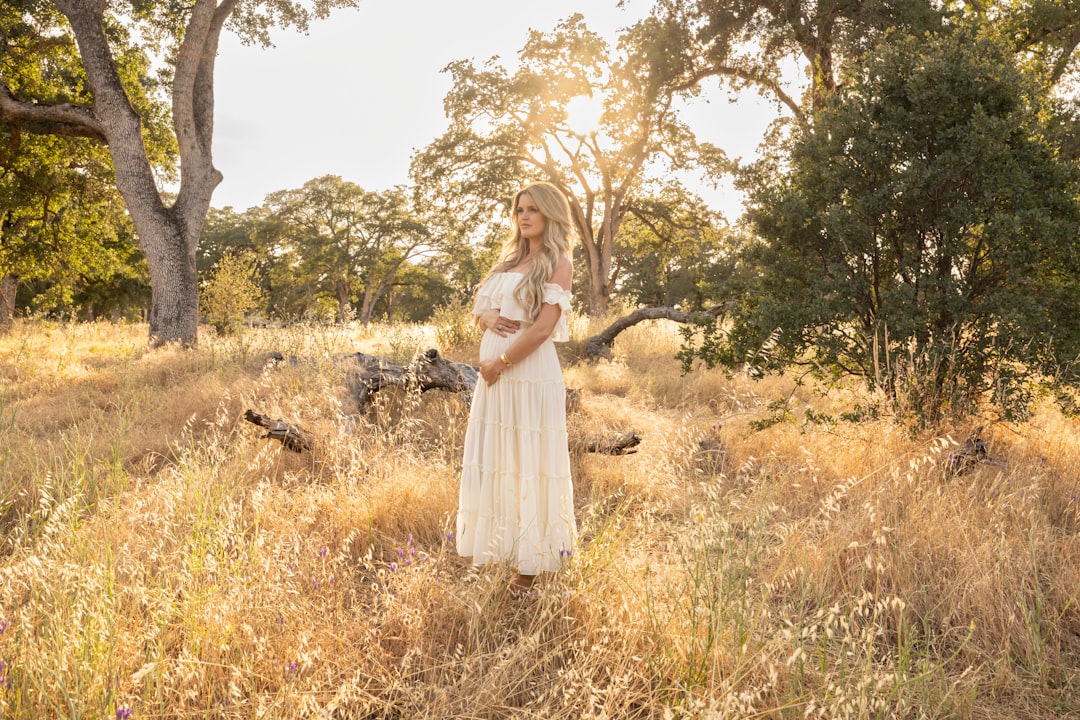
A single-parent maternity session photographs an expectant parent who is the sole adult in the family-formation story — by choice, by circumstance, or by both. The session is not a smaller version of a couple session, and it is not a placeholder for a partner who is missing. This guide on single-parent maternity work covers how to set up the questionnaire, who can stand in as a support person if the client wants company in the frame, posing that fills the visual space without making solo feel sparse, and how to write the gallery delivery in a way that respects the family the client is forming.
TL;DR
- Treat single parenthood as a complete family form, not as a partner-shaped absence.
- Ask in the questionnaire whether the client wants the session purely solo, with a stand-in support person, or with their own children present.
- Solo posing fills the frame through environmental scale, hand placement, and self-embracing positions — not through props that signal incompleteness.
- Self-portrait hybrids (tripod-assisted frames the client co-directs) work well for clients who want full creative control.
- Gallery write-ups should celebrate the family being formed; avoid “single mama warrior” tropes.
Why single-parent maternity sessions need their own approach
Single-parent maternity is a growing category. Solo-by-choice parents using donor sperm or eggs, parents whose partners died or left during the pregnancy, parents who separated from a co-parent before the pregnancy was complete, and parents in long-distance or military deployments where the partner cannot be present for the session. Each of these arrives at the session with a different story; what they share is that the session photographs one adult, not two.
Standard maternity workflows are written for the couple session. Posing prompts assume two adults; gallery write-ups default to “you and your partner”; the standard outdoor location scout assumes a couple’s romantic register. None of those translate cleanly to a solo session. Single-parent maternity work asks the photographer to rebuild the workflow around one adult while keeping the family-formation register that maternity sessions typically carry.
The starting point is recognising that single parenthood is a complete family form, not a partner-shaped absence. The session photographs the family the client is forming — solo, or solo plus older children — without framing the gallery as missing something. The framing matters because clients pick it up immediately; a session that subtly treats the parent as incomplete will produce frames that feel that way.
The pre-session questionnaire
The questionnaire signals how you frame the session before the client arrives. A standard maternity questionnaire asks about the partner; the single-parent version replaces or supplements that with three open-ended questions.
“Will the session be solo, or would you like a support person or older children present?” — open answer. The client may want the entire session purely solo, may want the first 20 minutes solo and 20 minutes with their mother, may want their best friend present off-camera as moral support but not in the frame, or may want their three-year-old in the family frames at the end.
“How would you like the family being formed to be represented in the gallery?” — open answer. Some clients want the gallery to feel definitively about them and the bump. Some want a small presence of a support figure. Some want a specific object or place to feature (a parent’s old home, a piece of jewellery from a grandparent, a letter to the baby).
“Is there language we should avoid in the gallery write-up or any printed deliverables?” — open answer. Some clients are tired of the “single mom warrior” framing. Some want the gallery write-up to not mention the absence of a partner at all. Some have specific words (“mother of one” rather than “single mother”) they prefer.
Do not ask about the path to single parenthood unless the client raises it. If they share, follow their lead; if they do not, the session works perfectly well without you knowing.
Stand-in support people
Some clients want a person in the frame, not as a partner-stand-in but as the support person they actually have in their life. The most common stand-ins.
A parent. The client’s own mother or father. The frame becomes a multi-generation maternity portrait — grandparent-to-be, parent, bump. Often emotionally rich because the client’s parent has been a primary support during the pregnancy.
A sibling. A sister or brother who has been present through the pregnancy. The frame is a sibling-and-bump portrait, often with an aunt-or-uncle reveal feel.
A best friend. A long-time friend who has stepped into a primary-support role. These frames work especially well outdoors with a relaxed, walk-and-talk register rather than formal poses.
An older child. If the client has older children, including them as the family unit they actually are. Frame the older child as the older sibling-to-be, not as a partner replacement.
A support animal or pet. Some clients have a deeply attached dog or cat that has been present through the pregnancy. Pet inclusion in maternity frames is a small thing that often produces quiet, loved images.
The questionnaire establishes who, if anyone, the client wants present. Whoever it is, brief them in advance: their role is supportive presence, not stand-in partner. Do not direct them into couple-style poses (a hand on the bump from behind, a forehead-to-forehead frame); those poses carry partner-specific intimacy that a parent or friend stand-in does not share with the client.
Solo posing that fills the frame
Solo posing for a single-parent maternity session needs a slightly different toolkit than couple posing. With one subject, the frame uses environmental scale, hand placement, and the body’s relationship to space to fill the composition rather than relying on a partner’s body to add visual weight.
Five poses anchor a solo session. The cradled-belly portrait — both hands on the bump, weight slightly back, head turned three-quarters to the light. The contemplative profile — full profile to camera, one hand on the bump, eye line forward and away, often shot with backlight at golden hour. The walking frame — client walking through a wide environment (a beach, a field, an open-plan studio with depth), with the camera at three-quarter behind or three-quarter in front. The seated environmental — client seated on a windowsill, a low wall, or a piece of furniture, with the room around them visible and giving context. The hands-only or hands-and-bump tight crop — a tight frame focusing on hands meeting on the bump, often used as a gallery-opening or gallery-closing image.
Avoid props that signal incompleteness. A pair of baby shoes on the floor next to the parent reads as “where the partner should be” in many compositions. A single empty chair beside the seated parent reads similarly. If you use props, use ones that carry the parent’s own story — a piece of family jewellery, a children’s book they were given, a hand-written letter to the baby — rather than props that imply a missing person.
Our maternity posing reference covers the broader pose vocabulary; the solo adaptation is mostly about leaning into environmental and hand-focused frames rather than couple-pair poses.
The self-portrait hybrid session
Some single-parent maternity clients want full creative control of their session — they have a specific aesthetic in mind, want to set up frames the way they have visualised them, and find the photographer’s interpretive direction more constraining than freeing. For these clients, a self-portrait hybrid session works well.
The structure: the photographer arrives, sets up lighting and a tripod, configures the camera with appropriate settings, and then runs the camera with a remote trigger or interval mode while the client poses. The photographer is present for technical handling — exposure changes, lens swaps, lighting adjustments, focus pulls, occasional small directional notes — but the client directs the body language and emotional register of each frame. The session feels collaborative rather than directed.
This format works particularly well for solo-by-choice parents who have spent years thinking about how they would document the pregnancy if it ever arrived. It also works for parents who find the standard photographer-directs, client-poses dynamic uncomfortable.
Pricing usually matches a standard solo session; the technical labour and time are similar. Mark the session in your booking notes as a hybrid so you arrive expecting to share creative control rather than lead it.
Older children in the frame
Many single-parent maternity clients have older children. The session structure for “solo plus older children” is different from a couple-with-child session because the parent is the only adult anchor of the frame.
Three patterns work. A short focused block with the older child at the start — 15-20 minutes when the child has the most attention to give. A “story” block mid-session — the older child interacts with the bump, places a hand on it, talks to it, often producing the most candid frames of the day. A closing block — parent and older child or children in family frames, with the bump central, signalling the family unit the parent is forming.
If the older child is very young (under 4) or has a sensory profile that makes a long session hard, schedule their participation for a 20-30 minute window and have a co-parent, grandparent, or trusted adult collect them at the end of that window. The parent then continues the solo portion of the session.
Location and timing
Location choice for single-parent maternity sessions follows the same logic as any maternity session — the maternity outdoor location scouting framework applies. The one adaptation: solo sessions photograph well in slightly larger environmental scale than couple sessions, because a single subject in a wide frame produces a quiet, contemplative register that matches the family-formation moment. Open beaches, fields with treeline horizons, larger windowed studios, and rooftop locations with sky negative space all suit solo work.
Timing follows standard maternity practice — the 30-to-36 week window covered in our maternity photography optimal timing guide. The client should be comfortable enough to walk and pose without significant fatigue; later than 36 weeks risks the session being cancelled or shortened by early labour or end-of-pregnancy exhaustion.
Posing reference table
| Pose | Where it works | Notes |
|---|---|---|
| Cradled-belly three-quarter | Studio, outdoor, indoor lifestyle | Both hands on bump, weight back; standard solo opener |
| Contemplative profile | Outdoor golden hour, large window | Full profile, backlight, eye line away from camera |
| Environmental walking | Beach, field, open studio | Use depth; walking frames give the gallery a hero image |
| Seated in environment | Windowsill, low wall, sofa | Frame the room; do not crop tight; show context |
| Hands-only tight crop | Any setting | Gallery opener or closer; not a hero frame on its own |
| Solo plus older child | Outdoor or in-home | Child anchors composition; parent’s eye line on the child or the bump |
| Self-portrait hybrid | Studio with tripod | Client directs; photographer handles tech |
Wardrobe
Wardrobe for solo sessions has more aesthetic latitude than couple sessions because there is no second wardrobe to coordinate with. Two patterns work especially well. Soft, draped clothing — a long flowing dress in cream, sand, dusty rose, or olive — gives the session a contemplative, editorial register that suits solo work. Sharper, structured clothing — a tailored top with a fitted skirt, or a slim jumpsuit with a defined waistline at the bump — gives a more confident, modern register that some clients prefer.
If the client is including older children, coordinate a palette that flatters both — neutral tones with one accent colour usually solves the coordination cleanly without looking matchy.
Pricing and structure
Solo maternity sessions price similarly to couple sessions in most markets — USD 400-1,200 in the US, GBP 350-900 in the UK, SGD 600-1,500 in Singapore, AUD 500-1,400 in Australia, INR 15,000-50,000 in India for a 60-90 minute session with 30-50 final images. Do not discount for being solo; the photographer’s time, lighting setup, posing labour, and post-production effort are the same.
If the client wants a self-portrait hybrid format, pricing matches the standard session. If older children are included, the session may run 90-120 minutes; quote accordingly. For the broader market framework, see our maternity photography pricing guide.
Gallery delivery and write-up
The gallery delivery email matters more than usual. Avoid generic “here are your beautiful photos” framing. Avoid the “single mother warrior” trope and any phrasing that frames the parent’s solo status as adversity to be admired. The simpler the framing, the better: “Your gallery is ready. Take your time with it. Let me know if you would like any adjustments.” Sincere, brief, no greeting-card warmth.
If the client has shared specific language preferences in the questionnaire, use them. If they prefer “mother of one” over “single mother,” reflect that. If they want the absence of a partner not mentioned in any deliverable, the gallery write-up has no such mention.
For sharing on your portfolio, ask explicitly after delivery. Some clients want the session shared as part of an inclusive portfolio; some want it kept entirely private; some allow specific frames but not others. The default should be private until permission is given.
Boundaries and what not to do
Do not call the parent “single mama” or “single mom” in conversation or written deliverables unless they have used those terms first. Do not ask about the absence of a partner — the client will share if they want to. Do not direct stand-in support people into couple-intimate poses with the client. Do not include props that imply a missing partner. Do not write portfolio captions framing the parent’s solo status as inspirational; the family is a family, not a story arc. Do not assume the parent is grieving, nervous, or pioneering — most are simply parents who happen to have one adult in their household, and they are ready for a portrait that reflects that.
For adjacent sensitive-session principles, the IVF and surrogacy journey framework covers an overlapping trauma-informed approach for clients arriving at maternity work after a complex path.
Closing
A single-parent maternity session photographs a complete family. The craft pieces — light, posing, location, colour — sit close to standard maternity practice with a few solo-specific adaptations around environmental scale and hand-focused composition. The relationship pieces — the questionnaire that asks about the family being formed rather than about a partner, the support person framework, the solo posing that fills the frame, the gallery write-up that respects the language the client has chosen — are where the work becomes specific. Clients who arrive solo have made decisions about their family; the session honours those decisions by photographing the family they have formed, on their terms. To explore maternity practice more broadly, the maternity photography hub covers the surrounding workflow.