
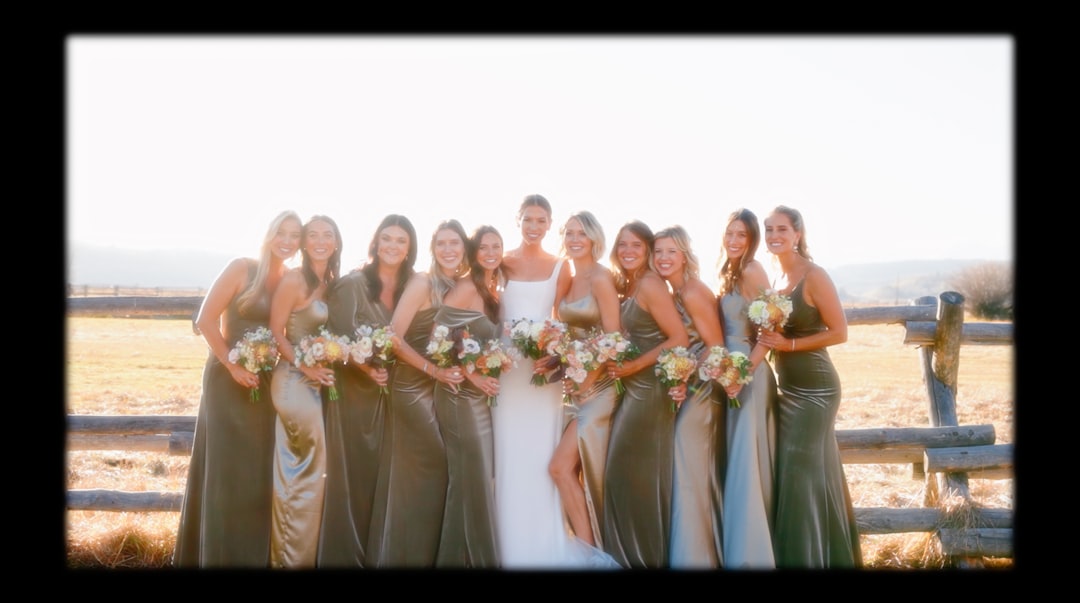
A couple sends their photographer a Pinterest board with 47 pins ranging from arch-of-roses Tuscan ceremony to dark-and-moody industrial loft to film-grain documentary candid. The photographer’s job is to find the through-line, propose a coherent visual direction, and align expectations before the engagement shoot. The wedding photographer AI moodboard workflow uses generative-image tools to compress that synthesis from a multi-call back-and-forth into a single shared deliverable. This 2026 guide covers when AI moodboards are appropriate, the Midjourney, Stable Diffusion, and DALL-E head-to-head, and the ethical disclosure rules that have to be in place before generative imagery touches a client conversation.
TL;DR
- AI moodboards are a planning artifact, not a delivered photograph. Every client interaction with AI imagery requires explicit disclosure that the images are AI-generated, not photographs of the wedding.
- Midjourney v7 (2026 release) is the strongest aesthetic engine for moodboard work; pricing runs USD 10-120 per month across Basic, Standard, Pro, and Mega tiers.
- Stable Diffusion 3.5 (open-source, Oct 2024) runs locally for free on capable hardware or USD 10-50 per month via DreamStudio, Replicate, or RunPod GPU rental.
- DALL-E 4 (released January 2026) is bundled with ChatGPT Plus at USD 20 per month and excels at text-rendering and integrated text-to-image conversation flow.
- C2PA Content Credentials, the FTC’s deceptive-advertising rule, and the EU AI Act (transparency obligations phasing in through 2026) all require disclosure when AI-generated imagery is shown to clients.
What the wedding photographer AI moodboard workflow actually looks like
The classic moodboard process: the couple sends visual references, the photographer pulls a tight selection, and the two parties walk through the proposed direction over a call. AI image generation adds a step in the middle. The photographer takes the couple’s references, a venue photo, and a written brief; generates 6-12 candidate compositions across two or three style directions; and brings the candidates into the call as starting points for the conversation, not as commitments.
The use cases that pencil in 2026:
Couple-vision visualization. The couple says “warm, candid, film-feeling” and the photographer generates three reference images in that direction, refines based on couple feedback, and lands on a shared visual vocabulary before the engagement shoot.
Venue mockup. The photographer takes a venue daytime photo and generates evening-light, golden-hour, and overcast variants to discuss timing trade-offs with the couple. This is purely a planning artifact; the actual coverage will obviously be the real conditions on the day.
Style comparison. The couple is torn between fine-art and documentary. The photographer generates representative compositions in each style for the same scenario (ceremony recessional, first dance, getting-ready) and uses them as a conversation tool.
Wardrobe and decor brainstorming. The bride wants to compare bouquet shapes; the couple wants to consider three table-setting palettes. AI generation accelerates the iteration without committing the florist or the planner to mock-ups.
The ethical floor: what cannot move
This is the part that has to come before the tool comparison, because the wrong workflow here ends careers.
AI imagery is never a delivered wedding photograph. An AI image of “the couple” or “the venue” or “the wedding” delivered as part of the gallery is fraud. The line is bright. AI moodboards live in the planning phase exclusively, and they are labelled as such throughout.
Disclose every time. Before any AI-generated image is shared with a client, the photographer states (in writing, in the proposal or moodboard PDF or shared link) that the image is AI-generated and not a photograph. The C2PA Content Credentials standard, supported by Adobe’s Content Authenticity Initiative, embeds provenance metadata in the image file itself. Use it. The FTC’s Section 5 deceptive-advertising rule treats undisclosed AI-generated marketing imagery as deceptive in 2026; the EU AI Act’s transparency obligations, phasing in through 2026 under the Act adopted in August 2024, require labelling of AI-generated content in commercial contexts.
Watch the bias. Default Midjourney, Stable Diffusion, and DALL-E outputs skew toward Western, white, slim, able-bodied subjects unless prompted otherwise. For multicultural couples, the default outputs frequently misrepresent cultural elements (fabric textures, ceremonial objects, religious symbols) in ways that range from inaccurate to offensive. Do not use AI generation to render specific cultural ceremonies. For couples whose wedding includes cultural-specific elements, lean on real reference photography from photographers who have shot those traditions, not on AI-generated approximations.
Copyright is unsettled. The US Copyright Office’s 2023 policy holds that AI-generated images without meaningful human authorship are not copyrightable. The Stability AI, Midjourney, and OpenAI lawsuits initiated by Getty Images and other rights-holders are still working through the courts in 2026. The practical implication: do not assume an AI-generated moodboard image carries the same legal protection as a photograph the photographer took.
Midjourney v7 in detail
Midjourney’s seventh-version model, released in 2026, is the strongest aesthetic engine in the consumer-grade tier for moodboard work. Pricing is tiered by monthly cost and image volume.
| Plan | Monthly | Fast hours / images | Notes |
|---|---|---|---|
| Basic | USD 10 | ~200 images/mo | Entry-level; no private mode |
| Standard | USD 30 | 15 fast hours, unlimited relax | Most photographer use cases fit here |
| Pro | USD 60 | 30 fast hours, unlimited relax | Includes private mode (images not public) |
| Mega | USD 120 | 60 fast hours, unlimited relax | For high-volume commercial use |
Style and character reference (–sref and –cref parameters), Niji 6 for stylized work, and the 2024-2025 Midjourney Web app and mobile app removed the Discord-only friction. Private mode (Pro tier and above) prevents generated images from appearing in the public Midjourney feed, which is the operational floor for any commercial work that touches client material.
Stable Diffusion 3.5 and the self-hosted route
Stable Diffusion 3.5, released October 2024 by Stability AI, is open-source. The model can run locally on a workstation with a capable GPU (16GB VRAM minimum for the larger variant) using ComfyUI, Automatic1111, or similar interfaces. The cost is hardware plus electricity; the trade-off is setup time and the steep learning curve of node-based workflows.
For photographers who do not want to self-host, paid options include DreamStudio (Stability AI’s hosted product) at roughly USD 10 for 1,000 credits up through subscription tiers, Replicate at roughly USD 0.0014 per second of GPU time, and RunPod for raw GPU rental at USD 0.20-0.40 per hour depending on card. LoRA fine-tuning lets advanced users train a custom style on their own photography portfolio, which is overkill for occasional moodboard work and the right move for a studio building a repeatable visual brand.
Civitai is the largest marketplace for community Stable Diffusion models and LoRAs. Quality and licensing vary; verify model licenses before commercial use.
DALL-E 4 in detail
DALL-E 4 was released in January 2026 and is bundled with ChatGPT Plus at USD 20 per month. ChatGPT Pro at USD 200 per month adds higher-volume access. Direct API access via the gpt-image endpoint runs roughly USD 0.04-0.16 per image depending on resolution and quality tier.
DALL-E 4’s strengths versus Midjourney: native text rendering inside images is accurate (Midjourney v7 still struggles with rendered text in many cases), the conversational ChatGPT interface allows iterative refinement in plain English, and multi-image input enables style transfer from a reference image to a generated composition. The 2026 Sora 2 video companion (“Image from Sora”) shares the same image backbone.
The trade-off versus Midjourney: aesthetic ceiling is generally lower for moody, painterly, or film-emulation outputs that wedding moodboards lean on. DALL-E 4 is faster to use; Midjourney v7 produces more usable images per attempt for the visual style most wedding photographers actually want.
The 2026 cost comparison for a single-photographer studio
| Tool | Monthly cost | Best for |
|---|---|---|
| Midjourney Standard | USD 30 | Aesthetic moodboard quality |
| DALL-E 4 via ChatGPT Plus | USD 20 | Conversational iteration, text rendering |
| Stable Diffusion (DreamStudio) | USD 10-50 (variable) | Self-hosted control, custom LoRA |
| Stable Diffusion (self-hosted) | ~USD 0 plus hardware | Full control, advanced workflow |
Most photographers landing here for the first time should start with one tool, not a stack. Midjourney Standard at USD 30 per month is the highest-leverage single subscription for moodboard work specifically. Add ChatGPT Plus if conversational iteration matters more than aesthetic ceiling. Self-hosted Stable Diffusion is a side project, not a starting point.
The disclosure script
A simple paragraph at the top of every AI-generated moodboard:
“The reference images on the following pages are AI-generated for planning purposes only. They are not photographs of your wedding, your venue, or any real event. They exist to help us align on the visual direction we will pursue when the actual coverage takes place. C2PA Content Credentials are embedded in each file.”
For the proposal contract, a single clause: “Vendor may use AI-generated reference imagery during planning. All delivered photographs in the final gallery will be photographs taken by the vendor on the wedding day. No AI-generated imagery will be substituted for or composited into delivered photographs without explicit prior written consent from Client.”
For couples whose wedding includes culturally specific ceremonies or attire, the moodboard workflow should pull from real reference photography rather than AI generation. AI tools in 2026 still misrepresent cultural elements in ways that are unacceptable for client work.
Where this fits with the broader AI stack
Generative moodboard work is the planning-phase application of AI in a wedding-photographer business. The post-production-phase application is editing, retouching, and culling, which we cover in our AI editing tools for wedding photographers and our Photoshop and Lightroom AI features guides. Couples evaluating photographers in 2026 increasingly ask about AI policy explicitly; our what couples should look for in a photographer page covers what a clean disclosure looks like from the client side. Separately, for a fast client or personal headshot, our free AI headshot generator restyles a selfie into a professional headshot in seconds. The full vendor landscape sits in our wedding photographer directory, and broader business material is in resources for working photographers.
This article references services where we may or may not have an affiliate relationship; the references are made on editorial merit. Generative-AI policy and copyright treatment are jurisdiction-specific and evolving; consult counsel before adopting workflows that involve client material.
Once you have built a moodboard, the same generative tools can produce reference frames and restyle your own shots — see our roundup of the best AI image generators for photographers.