
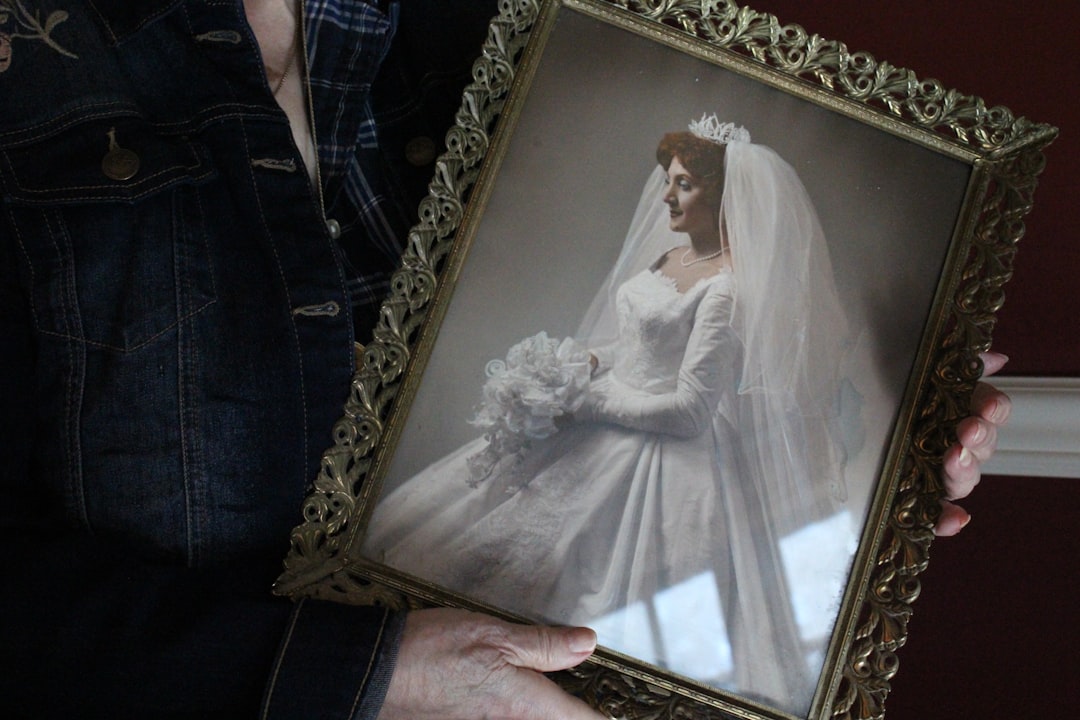
Posthumous wedding photo delivery is one of the hardest parts of a photographer’s working life. A wedding ends in a celebrated future — and then sometimes that future does not arrive. A spouse dies before the gallery is delivered. A couple divorces during the editing window. Or, less commonly, the photographer themselves dies before delivery and the studio’s executor must complete the work. This 2026 guide covers what photographers should put in their contracts before the worst happens, how to deliver galleries with care after death or separation, the legal access flow for estate executors and surviving partners across major jurisdictions, and how to write to a grieving family in a way that holds rather than wounds. Trigger warning: this guide discusses death, grief, and the dissolution of marriages.
This is for working wedding photographers, studio managers, and the friends or family members of photographers who have been asked to support delivery in a crisis. Resources for grief support — HelloGrief, the Dougy Center, GriefShare, the National Widowers’ Organization, the UK Widowed and Young charity, and Australia’s Grief Australia (formerly the Australian Centre for Grief and Bereavement) — are named at the close of this guide.
TL;DR
- Build the protocols into the contract before you need them. Name a delivery executor (a trusted second photographer or studio manager). Specify what happens to deliverables if the photographer or either spouse dies between the wedding and delivery. Specify what happens if the couple separates during the editing window.
- For death of a spouse: legal authority to receive deliverables sits with the estate executor (US Probate Court appointment, UK Probate Office Grant of Probate, AU Births Deaths and Marriages plus Supreme Court grant). Surviving partners not named as executors should be in the loop but not the legal recipient.
- Trauma-informed delivery cadence: ask before you send, never push to a public link, deliver via secure private gallery with no auto-share, schedule a follow-up at 30 days minimum to check whether the family is ready for albums, prints, or social-media-ready exports.
- Avoid clinical detachment. Avoid platitudes. Do not write “moving on” or “closure.” Write specific, present-tense, grounded sentences. Do not photograph or post any frames the family has not explicitly approved post-loss.
- For divorce or separation: deliver to both parties identical galleries simultaneously unless one party requests otherwise in writing and there is a legal reason to comply. The contract should pre-specify this.
Contract clauses to write before you need them
The single most important thing a wedding photographer can do for a future grieving family is write the contract that protects them when grief arrives. Five clauses cover the major scenarios.
Photographer-incapacity clause. Names a delivery executor — a trusted colleague or studio manager — who has access to the working files, the contract details, and the client communications, and who is empowered to complete delivery if the photographer is incapacitated or dies. Specifies that the working files are stored in a location accessible to the executor (a documented cloud account, a hardware key in a safe deposit box, or a password manager with a designated emergency-access contact via 1Password or Bitwarden’s emergency-access feature).
Spousal death clause. Specifies that in the event of the death of either spouse before delivery, the photographer will pause delivery, write to the surviving party (or their family) within 7 to 14 days to acknowledge the loss and offer the gallery whenever the family is ready, and hold the gallery for at least 24 months without contractual penalty. Specifies that the deliverable goes to the legal estate executor or the surviving spouse if no executor has been appointed and probate is not yet open.
Divorce or separation clause. Specifies that if the couple separates during the editing window, the photographer will deliver identical galleries to both parties simultaneously, will not delete or edit content at the request of either party except by mutual written agreement, and will hold any disputed content for resolution. Names that the photographer is not a party to the marriage dispute and will not provide testimony or content for legal proceedings without a court order.
Photo retention clause. Specifies how long the photographer holds RAW originals (typical industry standard is 1 to 5 years) and what happens to the archive after that window. Couples can extend retention by request. After death of both spouses with no instruction otherwise, the archive is held for an additional 24 months for family members to request access via documented executor authority.
Disposition-of-archive clause. Specifies the photographer’s plan if their studio closes or they die. Many studios designate that the working archive transfers to a named successor studio, that surviving deliverables are honoured, and that retained RAW originals are made available to clients for self-archive within a specified window.
Legal access flow: who can receive deliverables
When a spouse dies, the question of who can legally receive the wedding gallery is more complex than most photographers realise. The deliverable is the contracted output of a service the deceased was party to; it is part of the estate.
In the United States, estate authority sits with the appointed executor or administrator under state probate law. The probate process opens at the county probate court of the deceased’s residence; the appointed executor is the legal recipient of estate property including digital deliverables. The surviving spouse is often the executor but not always — some couples name a parent or sibling. Confirm the executor’s appointment documentation (Letters Testamentary or Letters of Administration) before delivering substantial assets. For practical purposes, delivering a private gallery link to the surviving spouse’s email address is generally fine as a first step, with the formal estate-recipient question handled separately if disputes arise.
In the United Kingdom, estate authority sits with the executor named in the will, granted formal authority via the UK Probate Office’s Grant of Probate. If there is no will, an administrator is appointed via Letters of Administration through the same office. The Grant or Letters take 8 to 16 weeks to issue; photographers should not delay delivery to the surviving spouse pending probate, but should document who received what.
In Australia, estate authority is jointly handled by the state Births Deaths and Marriages registry (which issues the death certificate and registers the death) and the state Supreme Court (which grants probate or letters of administration). NSW, Victoria, Queensland, WA, SA, Tasmania, ACT, and NT each run independent systems with similar process. The Australian Death Notification Service (an information aggregator launched in 2020) helps families track which agencies have been notified.
In Canada, estate authority sits with the executor under provincial probate law (Surrogate Court in Alberta and BC, Estate Courts in Ontario, court-appointed in Quebec under civil-law tradition). The grant is issued by the relevant provincial court.
The practical upshot for photographers: the surviving spouse is almost always the right delivery contact in the immediate aftermath. The formal estate-recipient question matters most for substantial-value deliverables (full RAW archive transfer, master print files, copyright transfer) and for deliverables in dispute.
Trauma-informed delivery: the first contact
If a spouse has died and the photographer learns of it before delivery — through the wedding planner, a mutual contact, social media, or a family member — the first communication is the most important. Three principles govern it.
First, write privately, not on a public channel. A private email or a written letter posted to a known address. Do not comment on social media. Do not post a tribute. Do not tag the deceased in any photographer-side content.
Second, write briefly. Three to five sentences. Acknowledge the loss specifically. Name the deceased by their first name. Offer the gallery whenever the family is ready. Provide a single point of contact and a generous timeline (24 months) without any pressure to respond. Do not ask questions in the first message — questions create obligation.
Third, write specifically and concretely. Avoid abstractions. Avoid “thoughts and prayers” — that phrase is exhausted and lands as performance. Avoid “moving on,” “closure,” “finding peace,” and “in a better place.” Concrete observation lands better than abstraction. A photographer who can write “Sarah laughed for almost a full minute during your first dance — you can hear it on the audio behind the song” is offering the family something specific to hold; a photographer who writes “wishing you peace during this difficult time” is offering nothing.
The Dougy Center (a children’s grief organisation in Portland, Oregon, with widely-cited bereavement guidance), HelloGrief, and GriefShare all publish brief guides on what to say and what not to say to grieving families; the photographer who reads even one before writing the first message will write a better letter.
Delivery cadence after loss
Cadence matters as much as content. The galleries should be delivered when the family is ready to receive them, not on the photographer’s schedule. The basic cadence is: pause everything until the family signals readiness, deliver via private gallery (PASS, ShootProof, Pixieset, or Cloudspot — services that do not auto-broadcast or auto-share), and check in at 30, 90, and 180 days post-delivery to see if the family wants to discuss albums, prints, or specific image requests.
Pause auto-features. Disable any auto-sharing, auto-social-export, or marketing-list automation tied to the wedding gallery. Pause any “your gallery has been viewed” or “5 days left to download” automated emails — these are insulting to a grieving family. Disable any auto-print sales reminders. Make the gallery quietly available indefinitely.
Hold the social-media-ready exports. Do not post the wedding to your portfolio, your Instagram, your blog, or your Pinterest without the family’s explicit written approval after the loss. The family’s relationship with the public-facing version of the wedding has changed. Some families want the wedding posted as celebration; some want it kept private; some want it posted later when they are ready. Ask. Wait for an answer. Do not assume.
Print and album conversations: do not initiate them in the first 90 days unless the family raises them. After 90 days, a single soft offer (“if you’d like to discuss prints or an album whenever you’re ready, I’m here”) is appropriate. After 180 days, a follow-up. Beyond that, hold the door open without pressure.
Divorce and separation during the editing window
Less acute than death but operationally complex. The contract should pre-specify identical-gallery delivery to both parties, no editing on request from either party without mutual agreement, and no destruction of content. The photographer is not the arbiter of which party “owns” the wedding photographs — both parties paid (or one paid for both) and both have a relationship to the imagery.
If the couple separates and one party requests that specific images not be delivered to the other, the photographer should respond in writing that absent a court order or mutual written agreement, the contracted deliverables will be delivered identically to both parties. Lawyers occasionally ask photographers for content during divorce proceedings; respond only to a court order, not to informal requests, and consult an attorney before any production.
Tone in delivery: identical neutral language to both parties. Do not editorialise. Do not skip the standard delivery email. Do not personalise either email more than the other. Treat both as full clients with full deliverables.
If the photographer dies: the executor’s playbook
The hardest case. A photographer dies between the wedding and delivery. The executor of the photographer’s estate or studio must complete the work.
The executor’s job, in order: identify all weddings within the delivery window from the studio’s contract list and CRM; locate the working files for each (likely in the photographer’s primary computer, primary cloud storage, and any external drives); contact each affected client within 30 days of the death with a brief written explanation and a timeline for delivery; arrange editing and delivery either by the photographer’s existing assistant editors, a designated successor photographer, or a qualified third-party editing service; deliver the galleries with appropriate cadence and care, acknowledging the photographer’s death in the delivery message but not making the message about the photographer rather than the couple.
Logistics: the executor needs access to the photographer’s primary computer (recovered via Apple’s Digital Legacy or Microsoft’s account-recovery process), the photographer’s cloud accounts (Google’s Inactive Account Manager or via account-recovery via the executor’s appointment), the photographer’s editing software licences (most subscription editing software allows transfer with proof of death), and any password manager (1Password and Bitwarden offer designated emergency-access contacts). The clauses you wrote in the contract pay back here.
What to write to a grieving family: examples
| Stage | What to write | What not to write |
|---|---|---|
| First contact post-loss | “I just learned about [Name]. I’m so sorry. The wedding gallery is ready whenever you are — there is no rush, and I’ll hold it for as long as you need.” | “Sending thoughts and prayers during this difficult time. Please let me know when you’d like to receive the gallery.” |
| Delivery message | “Here’s the gallery. Take your time. I’m here if you’d like to talk through any specific images.” | “Hope these bring you closure and help you move on. So many beautiful memories!” |
| 30-day check-in | “Just letting you know the gallery’s still there whenever you want to come back to it. No need to reply.” | “Have you had a chance to look through? Lots to celebrate!” |
| 180-day soft offer | “If you’d like to talk about prints or an album whenever you’re ready, I’m here. No timeline.” | “Don’t forget — your gallery expires in 30 days! Order prints now!” |
Resources for families and photographers
For families navigating loss: HelloGrief is a US-based community resource for adults and children. The Dougy Center in Portland, Oregon publishes free guides for adults supporting grieving children and families. GriefShare runs facilitated grief-support groups across the US, UK, Canada, and Australia. The National Widowers’ Organization and Soaring Spirits International (for widowed people of all genders) offer peer community. The UK’s Cruse Bereavement Support and Widowed and Young charities offer counsellor-led resources. Grief Australia (formerly the Australian Centre for Grief and Bereavement) is the Australian peak body. Empty Cradle and Sands UK serve perinatal loss specifically — relevant for posthumous delivery cases involving pregnancy and infant loss.
For photographers: the Professional Photographers of America (PPA) and the Society of Wedding and Portrait Photographers (SWPP) both offer member resources on contract templates and crisis-protocol guidance. Working photographers handling their first posthumous delivery should also consult a colleague who has — the network is not large but it is generous, and a 30-minute call before writing the first message is worth more than any template.
The longer view
Wedding photography sits closer to memorial work than the industry usually admits. The frames you make at someone’s wedding will outlast their marriage in some percentage of cases — through death, through divorce, through the slow attrition of any long timeline. Treating the contract, the delivery, and the post-delivery follow-up as a practice that will sometimes need to function under loss is the work of a serious wedding photographer. Most clients will never need the protocols. The few who do will remember whether the photographer met the moment.
For couples shortlisting photographers, the existence of these clauses in a contract is one of the cleanest signals of professionalism — alongside our broader checklist on how to vet a wedding photographer. For families restoring older wedding archives after a loss, the wedding photo restoration and repair guide covers parallel ground. The wedding photographers directory and the wedding photography styles overview sit alongside; pricing context is in average wedding photography cost.
Editorial guide. Not legal advice — consult an estate attorney or solicitor in your jurisdiction for specific cases. Trigger warning applies to the full guide.