
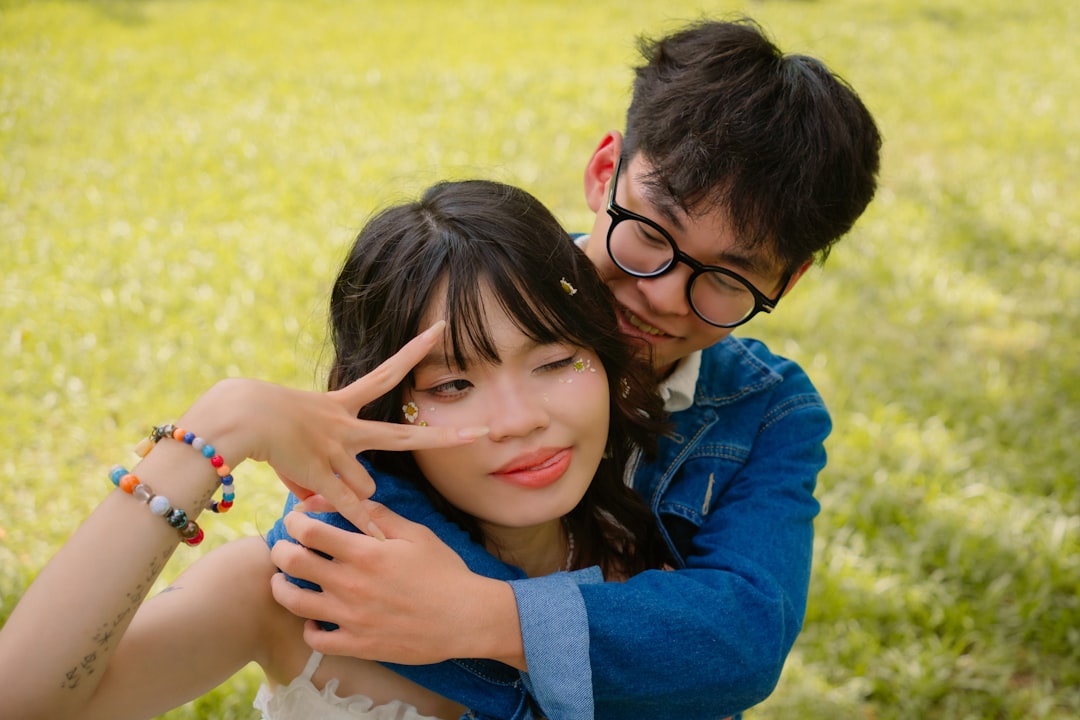
Couples portrait posing is the quiet craft behind every anniversary, dating, or lifestyle session that ends up feeling real instead of staged. The couple is not engaged and not getting married. They are simply in love, on their third anniversary, or celebrating a move or a graduation or a pregnancy they have not told anyone about yet. The job of the photographer is to direct them into frames that feel natural, flatter both bodies, and produce a gallery the couple will actually hang. This guide covers prompts, physical posture cues, hand placement, and timing for couples portrait posing in 2026, without borrowing from the engagement or wedding playbook.
TL;DR
- Anniversary and lifestyle couples need different prompts than engagement couples — less celebration, more intimacy.
- Start every session with three anchor poses, then let movement-based prompts do the rest of the work.
- Hand placement is the single most common posing failure — learn four solutions and use them in rotation.
- Height differences are easier to solve by changing the ground than by changing the pose.
- Ninety minutes is the right session length for a couples portrait block, not two hours.
Why couples portrait posing is different from engagement posing
Engagement sessions carry a specific energy — the ring is new, the announcement is imminent, the couple is performing excitement for future wedding guests. Anniversary and lifestyle couples are past that stage. They already know each other. The posing has to match that emotional register. Too much energy and the gallery feels staged. Too little and the frames fall flat.
The tonal shift is subtle but real. Engagement poses celebrate the new relationship; lifestyle poses document the established one. This means fewer open-mouth laughs, fewer ring-hand frames, more foreheads-touching, more slow-dance, more hand-on-face. Frame the session as documentation, not celebration, and the posing writes itself. Our guide on engagement session vs bridal session covers the adjacent distinction for wedding-track couples.
The three anchor poses to start every session
Start every couples session with three anchor poses. They get the couple comfortable on camera, produce at least one usable frame before the real session begins, and give you a safety net if creative prompts fall flat later.
First, the side-by-side close. The couple stands or sits shoulder to shoulder, both facing slightly toward the camera, inside arms wrapping around each other’s waist or back. This is the safest frame in any couples portrait vocabulary. Small variations work all session — one turns to kiss the other’s temple, one rests head on shoulder, both look off-camera at the same point.
Second, the forehead-to-forehead. The couple faces each other, foreheads touching lightly, eyes closed or looking down. Hands usually go on each other’s faces, arms, or lower backs. This frame reads as intimate without being performative. Works indoors, outdoors, in any light.
Third, the walking-away. The couple walks hand in hand away from the camera, either in silence or in conversation. This is the single most forgiving lifestyle pose because it removes facial posing entirely. Bodies are in motion, tension drops, and the resulting frames feel documentary. Shoot a burst, pick the one where their stride is in sync.
Movement-based prompts that outperform static poses
Once the three anchor frames are captured, the rest of a couples session is built on movement prompts rather than posed setups. Movement solves three problems at once. It reduces self-consciousness, it produces natural expressions, and it gives the photographer multiple frame options per prompt.
Five prompts that work across nearly every couple. Slow-dance in place, with music playing quietly if the location allows it. Whisper something true to your partner, something you have not said this week. Walk three steps, stop, turn and hug. Run your hand through your partner’s hair and tell them what you are thinking. Close your eyes, count to three, and open them looking at each other.
These prompts work because they are specific and because they generate micro-expressions the couple cannot fake. The photographer’s job during a movement prompt is to stay out of the way, shoot in short bursts, and call the next prompt only when the current one has produced a frame.
Hand placement — the most common posing failure
Hands are where posed couples portraits most often fall apart. Limp hands, floating hands, or symmetrical hand positions that read as stiff. Four hand-placement solutions to rotate through the session.
Solution one: hand on face. One partner places an open hand on the other’s cheek, jaw, or temple. The gesture carries intimacy and gives the hand somewhere definite to be. Works in almost any pose.
Solution two: hand in hair. Partner A runs fingers through partner B’s hair, or holds the back of their head as they lean in. Softer than hand-on-face, produces looser expressions.
Solution three: interlaced hands at waist. The couple stands close, inside arms wrapped around each other, hands interlaced low on the waist. This pose hides hands from the camera while keeping the couple physically connected.
Solution four: one hand busy, one hand active. If a pose requires one hand to rest, give it a clear destination (pocket, coffee cup, lapel, hair). A resting hand with nowhere to go reads as awkward on camera.
Solving for height differences
Height differences between partners are a standard variable in couples posing, not a problem. The common failure is to address height by having the taller partner bend down, which looks forced in almost every case. Three better solutions.
First, change the ground. Seat the taller partner on a step, a bench, a curb. Seat both partners if the height gap is significant. Ground-level changes bring faces to a similar level without forced posture.
Second, use embrace poses rather than side-by-sides. When the taller partner is behind the shorter one, arms wrapped around from behind, the height difference becomes an asset — chin on head, temple kiss from above, forehead to the top of the head. These frames only work at certain height ratios and are the reward for asymmetric couples.
Third, lean into the camera height. Shooting slightly up at a taller partner or slightly down at a shorter partner exaggerates the height difference intentionally, which often flatters rather than distracts. The middle-height camera position is usually the one that produces awkward geometry.
Location-matched pose sets
The pose vocabulary shifts by location. A couple posing in a city park uses different frames than a couple in their living room. Three location categories and the three or four poses that work best in each.
Urban outdoor (street, park, rooftop). Walking hand-in-hand, leaning against a wall together, one partner looking out over a view while the other looks at them, café-table sitting with coffee between them. Urban settings benefit from environmental poses that use the architecture.
Nature outdoor (beach, forest, field). Slow-dance in open space, seated on a blanket with legs overlapping, walking into the distance, one partner laid on the other’s lap looking up. Natural settings reward softer poses and looser bodies.
In-home lifestyle. Cooking or coffee-making together, reading on the couch with legs tangled, slow-dance in the kitchen, looking out a window together, bedroom frames with the couple fully dressed on a made bed. Home sessions rely on real activity, not posed imitation of activity.
For wardrobe pairing across these, the same principles we cover in what to wear for portrait sessions apply — coordinated rather than matching, texture over pattern, three tones maximum across both outfits.
Timing — ninety minutes is the right length
A couples portrait session works best at ninety minutes. Two hours is too long and the couple runs out of energy in the last thirty minutes. Sixty minutes is too short to include travel, wardrobe, or more than one location. Structure the ninety minutes like this.
First fifteen minutes: anchor poses, getting comfortable, checking wardrobe and light. The first frames rarely make the final gallery.
Middle hour: movement prompts, location transitions, the emotionally-looser frames that end up as the portfolio hero images. This is when the real work happens.
Last fifteen minutes: golden-hour or low-light frames, any specific shot-list items the couple requested, a final anchor pose in the best remaining light. Wrap before the couple is visibly tired.
A comparison of pose styles by session type
| Session type | Dominant pose style | Energy level | Best location |
|---|---|---|---|
| Anniversary (1–5 years) | Close-contact, movement-based | Relaxed, affectionate | Meaningful to the couple |
| Anniversary (10+ years) | Quiet, documentary, hand-heavy | Low-key, rooted | Home or long-standing location |
| Dating / just-together | Playful, walking, candid | Higher energy | Urban, café, outdoor |
| Pre-baby announcement | Soft, seated, hand-on-belly | Calm, intimate | Home, nature |
| Lifestyle editorial | Activity-based, environmental | Varies by brief | Location built into brief |
Posing prompts for the camera-shy partner
Most couples have one partner who feels comfortable on camera and one who does not. The camera-shy partner is the harder half of the session and shapes every frame until they relax. Three strategies to work with them specifically.
First, give the shy partner something to do. Looking at the confident partner is the easiest job — the camera becomes incidental. Prompts like “watch your partner tell the story about the first time you met” take the shy partner off camera awareness entirely.
Second, start at physical distance. The first frames of the session put the shy partner at arm’s length from their partner, not pressed against them. Close-contact poses come later, once the body has settled.
Third, shoot the shy partner from slightly below their eye line. Subtle upward camera angles flatter almost every face and read as confident in the final frame. The reverse — shooting down on a shy subject — emphasises the hesitation the photographer is trying to avoid.
What to ask the couple before the session
A five-question intake form improves the posing outcome more than any on-the-day direction. Which partner is more comfortable on camera and why. What is the couple’s love language (physical touch, words, quality time, acts, gifts). Is there a specific frame from someone else’s gallery they want you to replicate or avoid. What do they intend to do with the final images — print, card, wall art, social. Are there any physical considerations (injury, pregnancy, mobility) that shape the pose options.
The answers steer the session. A couple whose love language is physical touch poses easily into close-contact frames. A couple whose language is words does better with prompts that include spoken direction. A couple printing wall art needs different frame ratios than a couple using images for social. The intake is fifteen minutes of prep that saves ninety minutes of guessing.
Working with your photographer on pose expectations
If you are the couple booking the session, rather than the photographer running it, the single most useful pre-session conversation is about pose style. Bring three or four reference images from the photographer’s existing portfolio, not from Pinterest or Instagram searches. The reference frames tell the photographer where your taste sits within their existing vocabulary.
Photographers vary in how much they direct versus how much they let the couple drift. A high-direction photographer will place hands, call poses, and shape each frame. A low-direction photographer will set up prompts and let the couple produce the pose inside them. Neither approach is universally better — the match is about what makes the couple most comfortable.
For finding a photographer whose style fits the session you have in mind, the portrait photographer directory and our wedding photographers near you hub both include lifestyle-portrait specialists. For a broader vetting framework, how to pick a photographer for your session applies the same criteria to any couples portrait booking.
Closing
Couples portrait posing is, at its best, almost invisible in the final gallery. The couple looks like themselves. The poses look like choices the couple made, not choices the photographer imposed. The frames feel like the relationship, not a performance of it. Getting there takes a short pose vocabulary used confidently, a handful of movement prompts that produce expression instead of performance, and a session length that respects the couple’s attention.
Ninety minutes. Three anchor poses. Five movement prompts. Four hand-placement solutions. Rotate through them, stay out of the way when the couple is doing the work, and the gallery will hold up five years from now when it matters most.