
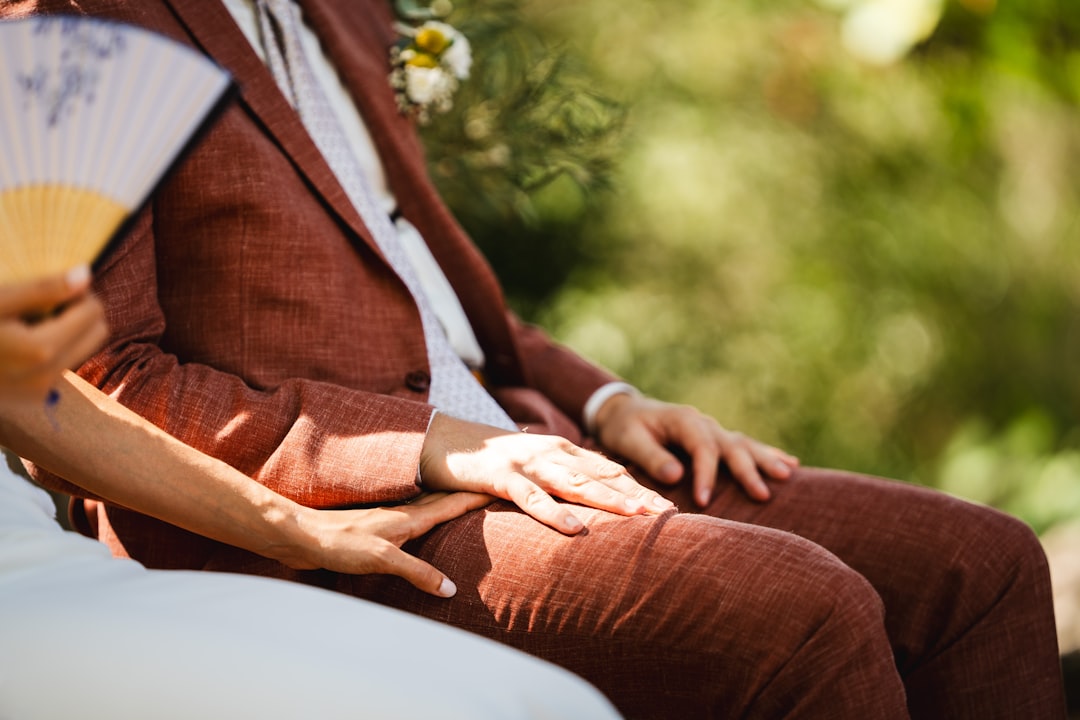
Weddings are intimate, photographed events that, in 2026, are also legal data-processing operations. Every guest whose face appears in a photograph is an identifiable person under privacy law, and every image the photographer uses for portfolio or marketing is a use of that person’s likeness. Most of this is low-friction most of the time, but the places where it goes wrong (a guest who objects to a portfolio image, a couple whose EU family members invoke GDPR rights) are unpleasant and sometimes expensive. This guide covers wedding model release and guest privacy in 2026 with practical language for contracts, signage, and post-wedding use.
TL;DR
- Model releases from every guest are impractical and usually unnecessary. The couple’s contract is the primary consent mechanism.
- GDPR Article 6 applies to any EU guest or EU-based use of wedding imagery. It does not apply only in Europe.
- Portfolio use and commercial use are legally different. Portfolio has broader latitude; paid advertising has narrower.
- A short signage notice at the ceremony entrance helps document implied consent for candid photography.
- Always respond to a guest’s withdrawal request quickly and without argument.
Why wedding model release and guest privacy is a live issue
For most of photography history, wedding imagery sat on a shelf or in an album and was seen by the couple’s family. Today, the same images live on the photographer’s website, the couple’s social media, the venue’s Instagram, the florist’s portfolio, the planner’s blog, and sometimes a publication’s feature. Each new surface is a new publication, which is the legal event that triggers privacy rights for every identifiable person in the frame.
The fear of bad outcomes (a guest suing over a portfolio image) drives some photographers to demand model releases from every wedding guest. This is impractical, and in most jurisdictions unnecessary. The better approach is a layered consent model: a strong clause in the couple’s contract, a signage notice at the venue entrance, a clear portfolio-versus-commercial distinction in how images are used, and a quick-response withdrawal process when someone objects.
The couple’s contract as primary consent
The couple’s photography contract is where most of the legal work is done. A well-drafted contract explicitly licenses the photographer to use images from the wedding for: portfolio display on the photographer’s website and social media, submission to editorial publications, use in marketing materials that illustrate the photographer’s services, and use in teaching materials or workshops. The contract also names the limits: not for third-party commercial use without further consent, not for AI training datasets, not for stock photography sales.
A typical clause reads: “The couple grants the photographer a non-exclusive, royalty-free, perpetual license to use wedding images for the photographer’s own portfolio, marketing, publication submission, and educational purposes, including images depicting guests. The couple is responsible for informing guests that the wedding will be photographed and that images may be used as described.” This shifts the guest-communication burden to the couple, which is appropriate because the couple is the party with the guest relationships.
A full wedding photography contract walkthrough covers the full contract structure, and the image-use section is typically one of the longer clauses.
GDPR and why it matters outside Europe
GDPR (General Data Protection Regulation) applies whenever an EU resident’s personal data is processed, regardless of where the processing happens. For wedding photography, the relevant processing is the photographing, storing, and publishing of recognizable images of an EU guest. A US photographer shooting a wedding in Napa where two guests are EU residents is, technically, processing those guests’ personal data under GDPR. A UK photographer post-Brexit falls under UK GDPR, which is substantially identical to EU GDPR.
Article 6 of the GDPR requires a lawful basis for processing personal data. The six bases are: consent, contract, legal obligation, vital interests, public task, and legitimate interests. For wedding guest photography, the common bases are consent (a guest explicitly agreeing), contract (implicitly through attending a contracted wedding), and legitimate interests (the photographer’s business need balanced against the guest’s reasonable expectations of privacy at a wedding where photography was announced).
Legitimate interests is the basis most photographers rely on in practice. It requires a balancing test: the photographer’s legitimate commercial interest in the imagery versus the guest’s expectation of privacy. At a wedding where photography is clearly announced and expected, the balance usually tips toward legitimate interests, but the test has to be reasoned and documented.
Signage at the ceremony entrance
A short signage notice at the ceremony entrance documents that guests were informed about photography and its likely uses. A model sign reads: “This wedding is being photographed. Images may be used for the couple’s personal records, the photographer’s portfolio and marketing, the vendors’ portfolios, and editorial submissions. If you do not wish to be photographed or featured, please speak with the photographer or the wedding coordinator before the ceremony.” Post it visibly at the ceremony entrance and reception entrance.
Signage is not a legal substitute for consent, but it strengthens the legitimate-interests balancing test under GDPR by establishing the guest’s reasonable expectation. In the US, where privacy laws vary by state, signage similarly strengthens the photographer’s position against a potential claim of “appropriation of likeness” or “unauthorized commercial use.” California, New York, and Illinois have stricter right-of-publicity laws than most states.
Portfolio use versus commercial use
The legal and ethical standards are different for portfolio and commercial use. Portfolio use (your own website, your Instagram, your blog, editorial submissions, teaching examples) falls under what is called editorial or expressive use in most jurisdictions, and it has broad latitude. Commercial use (paid advertising, stock photography sales, third-party licensing, brand partnerships) has narrower latitude and often requires explicit model releases from identifiable people, especially children.
The practical line: if a guest appears in a frame you post on your Instagram, you are on solid ground. If a guest appears in a sponsored ad you run for your photography services, you are in a gray zone that would benefit from a release. A central image of the couple is almost always fine. A central image of a guest crying during the ceremony, used in a paid ad, is riskier.
A full photography copyright and usage rights guide covers the broader framework of image rights, and the model-release question sits as a specific branch within it.
Children at weddings
Children require additional care. Most US states restrict commercial use of a child’s likeness without parental consent, and GDPR sets a higher bar for processing children’s personal data (Article 8, explicit parental consent for ages 13 and under in most member states, 16 and under in some). A photograph of a flower girl used in a portfolio or editorial submission is usually acceptable, but a photograph used in a paid ad, a course promotion, or a third-party commercial context should have explicit parental consent.
When submitting to an editorial publication, many publications now require the photographer to confirm that any identifiable children in the submission have parental consent. A short email note to the couple asking them to confirm parental consent before submission is the cleanest way to handle this.
Handling a guest objection or withdrawal
Sometimes a guest contacts the photographer after the wedding and asks for their image to be removed from the portfolio or social media. The right answer is almost always yes, quickly and without argument. The legal weight of a withdrawal request varies by jurisdiction, but from a reputation standpoint, the cost of a small portfolio edit is trivial, and the cost of a public complaint is not.
Document the request and the removal. Keep a simple spreadsheet with the date of the request, the image reference, the removal action, and any correspondence. If the same image was syndicated to a publication, email the publication and ask them to remove it too. Most will oblige. The documentation matters because GDPR requires the data controller (the photographer, in this context) to respond to data-subject requests within specific timeframes (typically 30 days) and to keep records of responses.
When a model release is worth getting
Full model releases are worth collecting in specific scenarios. For a styled shoot where you will use the images for commercial or teaching purposes, get a release from the model couple and any paid participants. For a wedding that is doubling as an editorial shoot (a magazine-commissioned real wedding) get a release from the couple, clearly naming the publication’s rights and the photographer’s rights. For any image you plan to use in paid advertising, get a release from any identifiable person prominently featured.
A short release template covers: the person’s name, the scope of permitted uses (portfolio, editorial, advertising, teaching), the term (usually perpetual), the territory (usually worldwide), any compensation or exchange (often “no compensation, model retains copy of images”), and signatures. Two or three clauses are enough for most wedding contexts. Overcomplicated releases feel threatening and discourage signing.
International weddings and cross-border use
When a wedding crosses jurisdictions (destination wedding, EU couple in the US, US photographer shooting in Italy), the stricter of the relevant laws usually applies to how you use the imagery. A US photographer shooting an EU couple’s wedding in Italy who posts the imagery to their US-based website has to consider GDPR because the data subjects (EU residents) are protected regardless of where the processing happens. A destination wedding legal requirements guide covers the broader jurisdiction question.
For cross-border contracts, the governing law and jurisdiction clause matters. Our wedding contract jurisdictions compared guide covers the tradeoffs of naming UK, US, or EU law in the contract, which affects how image-use disputes would be handled.
A practical consent checklist
The table below is the quick consent audit for a standard wedding. Walk through it before the wedding and adjust only where the specific situation requires more.
| Item | Who consents | Mechanism |
|---|---|---|
| Couple’s image use | Couple | Signed contract clause |
| Guest candid images (portfolio) | Couple conveys, implicit from guests | Contract + ceremony signage |
| Guest images in paid advertising | Identifiable guests | Explicit release needed |
| Child images (portfolio) | Parents (usually implicit) | Contract notes, courtesy check |
| Child images (commercial) | Parents | Explicit parental consent |
| Editorial submission | Couple | Contract + submission confirmation |
| EU guest (GDPR) | Legitimate interests balance | Contract + signage + withdrawal process |
Publication submissions and third-party consent
Submitting a wedding to an editorial publication introduces a third party to the image use chain. Most publications require the photographer to confirm that the couple has consented to publication. A one-sentence email from the couple confirming they are happy for the wedding to be submitted is enough in almost every case. The editorial submission playbook covers the submission side broadly, and the couple-consent confirmation is a small but important step in it.
Tov Studio closing thought
Wedding model release and guest privacy is a topic that rarely becomes a real problem if the basics are in place, and becomes a major problem quickly when they are not. The basics are simple: a strong contract clause, a ceremony signage notice, a clear portfolio-versus-commercial distinction, and a quick-response withdrawal process. Most photographers will never need to invoke any of this in their careers. The small number who do are almost always the ones who had nothing in place. Browse the wedding photographer hub for examples of studios that publish their privacy and image-use policies transparently on their websites.
Editorial guide. No affiliate links in this article.