
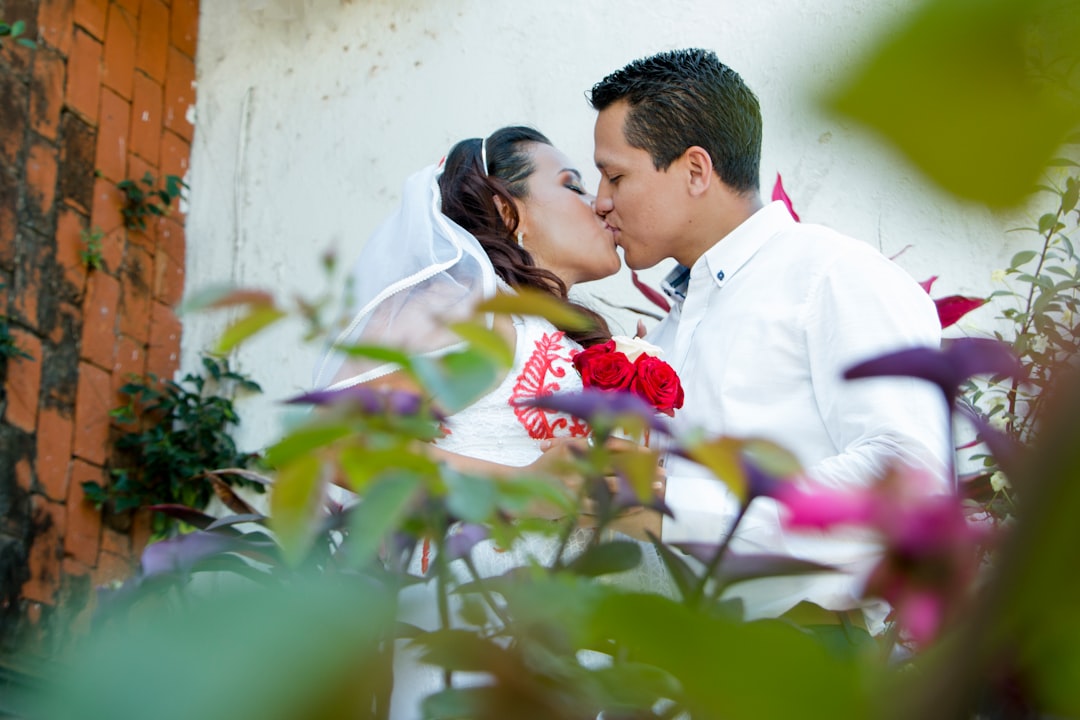
Guatemalan Mayan wedding photography requires more cultural care than almost any other Latin American market this guide covers. Roughly 41% of Guatemala’s population is indigenous, primarily K’iche’, Kaqchikel, Mam and Q’eqchi’ Maya, alongside many smaller communities. The post-civil-war period (the conflict ran from 1960 to 1996) shaped how indigenous communities relate to outside documentarians, and a respectful photography practice today defers to community leaders, families, and where appropriate, an aj q’ij (Mayan day-keeper or spiritual guide). This 2026 guide walks couples and photographers through how to plan culturally specific Guatemalan Mayan wedding photography — the legal layer, the ceremony layer, the cultural detail work, and pricing.
TL;DR: Guatemalan Mayan wedding photography essentials
- Civil registration is handled at Guatemala’s Registro Nacional de las Personas (RENAP); the civil step is the legal one.
- Religious and traditional ceremonies layer on top: Catholic parish, Protestant evangélico, and where the family chooses, traditional Mayan ceremony led by an aj q’ij.
- Mayan ceremonies are sacred. Photographers must defer to the family and the aj q’ij on what is photographed and how. Some elements may be off-limits.
- Cultural anchors include the huipil and corte ceremonial dress, marimba music, and (in some communities) the wedding xukulem (kneeling) ceremony.
- 2026 budgets in Guatemala City: roughly USD 1,200 to USD 8,000 for full-day coverage, with Antigua and Lake Atitlán destination tiers above.
A respectful starting point
Before booking a photographer, before drafting a shot list, before any logistics, the right starting point is the family and (where applicable) the aj q’ij. Mayan spiritual practice is communal and rooted; it is not a tourist event, and it is not a “ceremony aesthetic” that international wedding magazines own. Photography of certain ritual elements may be welcomed; photography of others may be declined. The family decides, and the photographer respects that boundary in writing.
Many Mayan couples choose a hybrid: a Catholic parish or evangelical ceremony, a civil registration at RENAP, and a traditional Mayan ceremony before, during or after. Some couples hold all three over a multi-day arc. Some hold only the civil and traditional, deliberately not the Catholic. Each path is valid and each shapes the photography differently.
Civil registration at RENAP
Civil marriage in Guatemala is registered through the Registro Nacional de las Personas (RENAP). The civil ceremony is the legally binding step. It is typically brief, indoors, and document-heavy. Photographers should treat it as a documentary block — clean reportage of the signing, the witnesses, the family present. Some couples hold the RENAP signing on a different day from the religious or traditional ceremony.
If you’re booking in the capital and want a primer on the city’s photographer ecosystem, our city-level breakdown of wedding photographers in Guatemala City covers neighborhood logistics, altitude considerations and Antigua-versus-capital trade-offs.
Catholic and evangelical ceremonies
Guatemala’s religious landscape is roughly half Catholic and a substantial Protestant evangelical share, with traditional Mayan spirituality often coexisting alongside either. Catholic parish weddings frequently happen at landmark venues: La Merced and the Iglesia de San Francisco in Antigua, the Catedral Metropolitana in Guatemala City, smaller parishes in highland villages.
Photography logistics: Antigua’s parishes are heavily booked from October through April. Some restrict flash; some restrict drone overflight. Confirm in writing. Antigua’s altitude (around 1,500m) and Guatemala City’s (around 1,500m) means your photographer should also factor in the cooler dry-season evenings.
Traditional Mayan ceremony: the photographer’s responsibility
If the family includes a traditional Mayan ceremony, the photographer’s first job is to ask, in writing, several questions of the family and ideally of the aj q’ij:
What may be photographed? The fire ceremony (xukulem in K’iche’, or comparable elements in Kaqchikel, Mam and other traditions) involves the lighting and feeding of a sacred fire with offerings. Some elements may be openly photographed; others may not be. The aj q’ij decides.
From where? Some ceremonies require the photographer to remain outside a defined ritual circle. Others permit closer work but only at certain points. Establish positioning rules before the ceremony begins.
What is the lighting reality? Mayan fire ceremonies are often held outdoors, sometimes at sites of cultural significance (Iximché, certain pre-Hispanic ruins where access is permitted). Available-light skill matters; flash is often inappropriate during the rite itself.
Who introduces the photographer? The family or the aj q’ij. The photographer should be introduced by name, role and intent. This is not a stylistic choice — it is a respect protocol.
A photographer who has not previously documented Mayan ceremonies should not be your primary choice for one. Ask for portfolio examples and references explicitly. Couples planning highland or Lake Atitlán traditional ceremonies who want the freedom of an intimate format may also want to consider elopement photographers who specialize in small, ceremony-anchored, family-led events.
Cultural detail shots: huipil, corte and beyond
The visual vocabulary of Mayan ceremonial dress is dense and community-specific. The huipil (woven and embroidered blouse) and corte (wrapped skirt) carry, in their patterns, motifs that identify the wearer’s home community — San Antonio Aguas Calientes patterns differ from Santiago Atitlán patterns differ from Quetzaltenango patterns. The huipil is not interchangeable. A photographer should:
Photograph the huipil and corte both as still-life and as portrait, in good light, with the wearer’s permission. Capture the faja (woven belt) and any tocoyal (head-piece) where worn. If the bride or family member is wearing a community-specific pattern, ask the family to identify it for the gallery captions. This is editorial honesty: the gallery will be a record consulted by future generations and the community-of-origin should be named.
Beyond dress, marimba music is Guatemala’s national sound — a chromatic wooden xylophone played by ensembles of three or more musicians. A live marimba ensemble at the reception is a high-priority documentary moment. Tamales, fiambre (often associated with Día de los Santos but featured at celebrations), atol de elote and the wedding cake are food-table anchors.
Antigua, Lake Atitlán and Guatemala City: three different photography environments
Antigua. UNESCO-listed colonial town, cobblestone streets, vivid pastel facades, three volcanoes (Agua, Fuego, Acatenango) in the backdrop. La Merced parish is the iconic wedding location. Antigua’s tourist density is high — schedule portraits before 9:00am or after sunset for clean backgrounds. Cobblestones are punishing; brief your photographer on footwear and gear logistics.
Lake Atitlán. The lake is ringed by Maya villages — Santiago Atitlán, San Pedro La Laguna, San Marcos, San Juan La Laguna, Panajachel — each with distinct dress and craft traditions. Many couples hold ceremonies at lake-edge venues with the volcanoes (San Pedro, Atitlán, Tolimán) in the frame. Boat transit between villages is part of the day; schedule accordingly.
Guatemala City. Capital, urban, multi-zone. Zona 10, Zona 14 and Zona 16 (Cayalá) hold most upmarket venues. Catedral Metropolitana and the Centro Histórico anchor the downtown options. Altitude (1,500m) is a mild factor for international photographers; hydration and pace matter.
2026 pricing in Guatemala
Guatemalan photographers typically quote in GTQ (quetzales) but USD reference is standard for international clients. Public signal from 2025 vendor pricing and destination planners suggests:
| Coverage tier | Hours | Typical USD range | Includes |
|---|---|---|---|
| Essentials | 4–6 | USD 1,200 – 2,200 | Single shooter, civil plus religious or traditional ceremony, online gallery |
| Standard full-day | 8–10 | USD 2,200 – 4,500 | Lead plus assistant, multi-ceremony coverage, edited gallery |
| Premium | 10–14, multi-day | USD 4,500 – 8,000 | Two shooters, video partner, fine-art album, Antigua and lake travel |
Antigua and Lake Atitlán destination tiers add 20–40% in travel and lodging. Compare against our wedding photography cost ranges for sanity-checking.
Logistics for international families
Many Guatemalan-Mayan couples have family members who emigrated to the US, Canada or Mexico during or after the civil war (1960–1996). The diaspora is a significant audience for the photo gallery. Three contractual specifics that matter:
Cloud-gallery delivery within 7 days. Diaspora family wants to see images quickly. A 30–60 image sneak peek is now standard.
Multi-resolution exports. Family in the US wants print resolution; family on slower internet connections in highland villages wants social-resolution. Both should be in the contract.
Bilingual or trilingual captions where appropriate. If your family speaks K’iche’, Kaqchikel or another Mayan language alongside Spanish, the gallery captions should reflect that. Ask whether your photographer can deliver captions in multiple languages or whether you’ll write them.
Earlier in the booking process, our broader walkthrough on how to choose a wedding photographer covers contract structure, portfolio review and reference checking.
What not to do
A short list, because it matters:
Do not approach a Mayan ceremony as a photographic “experience.” It is a sacred family rite. Do not pose subjects in huipil and corte for stylized “fashion” frames if the family hasn’t requested that — the patterns are not costume. Do not flatten K’iche’, Kaqchikel, Mam, Q’eqchi’ and other traditions into a generic “Mayan” framing — name them where you can. Do not use stock-tour-style imagery (Tikal at sunrise, market stalls) as filler for the gallery; it cheapens the wedding’s actual story.
The post-civil-war historical context matters. Many indigenous Guatemalan families experienced direct or generational trauma; outsider photographers entering communities to document cultural ceremony carry a responsibility that does not exist in equivalent form in lower-stakes markets. Approach with humility, defer to the family, and the resulting gallery will be both honest and meaningful.
Working with highland light and altitude
Guatemala City and Antigua sit at roughly 1,500 meters elevation; Lake Atitlán at around 1,560 meters; Quetzaltenango (Xela) higher still at about 2,300 meters. Altitude affects light quality, equipment performance and human stamina. Practical photo implications:
Highland sunlight is harsher than lowland equivalent because there is less atmospheric diffusion at altitude. Midday shadows are sharper; portrait sequences need either open shade or a diffuser, especially between 10:00am and 3:00pm. The volcanoes around Antigua (Agua, Fuego, Acatenango) often hold late-afternoon clouds that catch warm light — a portrait sequence on a hill or rooftop facing the volcanoes near sunset is one of Antigua’s most distinctive frames. Lake Atitlán’s three surrounding volcanoes (San Pedro, Atitlán, Tolimán) function similarly; afternoon haze typically clears the lake’s surface for crisp reflections.
Battery performance degrades faster at altitude in cooler temperatures; brief your photographer on charging logistics. International photographers coming from sea level should arrive 24 hours before the ceremony to acclimatize — coordination meetings, scout walks and shopping trips all become harder in the first hours after arrival.
Coordinating with the family liaison
For Guatemalan Mayan weddings specifically, a family liaison — often an aunt, uncle, godparent or family friend with deep cultural fluency — is one of the most useful coordination resources. The liaison briefs the photographer on names, relationships, expected ceremony order, language switches and any cultural protocols. This role is informal but essential.
If you’re a non-Guatemalan photographer working a Mayan wedding for the first time, ask the family in advance to identify a liaison and set up a 30-minute pre-event call. Most families welcome this; it shows respect and reduces the chance of unintended missteps during the day. The liaison can also help with caption-writing for the gallery — naming dress patterns by community of origin, identifying foods and drinks accurately, and ensuring the gallery captions read with cultural specificity rather than generic description.
Pre-booking checklist for Guatemalan couples
- Confirm the photographer has portfolio examples of Mayan ceremony coverage if applicable; ask for references.
- Have the family or aj q’ij brief the photographer on what is and is not photographable.
- Lock the legal-ceremony plan: RENAP civil only, RENAP plus religious, or RENAP plus religious plus traditional.
- Schedule Antigua portraits before 9:00am or after sunset for clean tourist-free backgrounds.
- For Lake Atitlán, build boat transit and weather contingency into the timeline.
- Specify USD or GTQ pricing and conversion date.
- Get a sneak peek within 7 days; full gallery within 6–8 weeks; bilingual captions where applicable.
Bringing it together
Guatemalan Mayan wedding photography is one of the most visually rich and culturally significant markets in Latin America, and it is also one of the most demanding of respect, deference and protocol. The communities — K’iche’, Kaqchikel, Mam, Q’eqchi’ and many others — own their ceremonies, dress and music. The photographer’s job is to document what the family invites them to document, and to do so with care and editorial honesty. Done well, a Guatemalan Mayan wedding gallery becomes a multi-generational record. Done badly, it becomes voyeurism. Brief your team thoroughly, defer to the family on every cultural decision, and the resulting work will be worthy of the day.
To browse photographers more broadly, start at our wedding photographer hub.
Some links in this article are affiliate links. As an Amazon Associate we earn from qualifying purchases.