
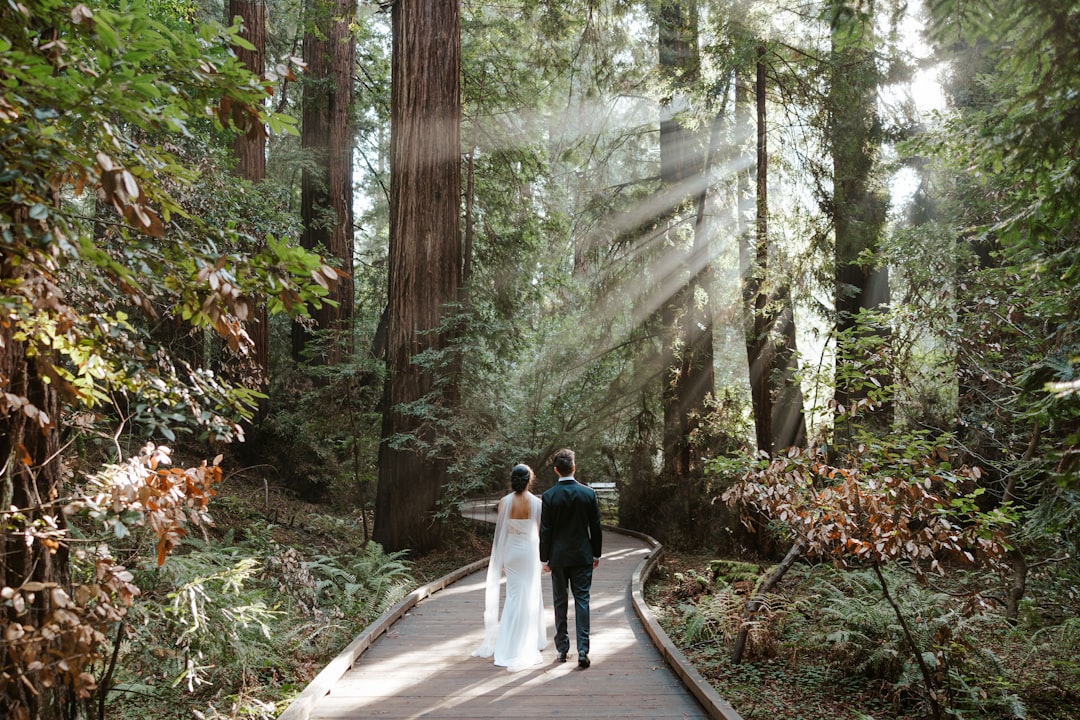
Most couples start planning by picking a date, then look for a photographer — but the best month to get married for photos works in reverse. Light quality, weather consistency, foliage, and venue availability all shift month by month, and they shift differently across US regions. This guide walks through which months produce the cleanest, most flattering wedding photographs in each major region, what you trade off, and how pricing moves alongside the light.
TL;DR — the short answer
- Northeast: Late September and early October give the best combined foliage, light, and weather. June is a strong second.
- South: Late October through early December, and March through early May. Summer heat makes exteriors unreliable.
- West (coastal): September and October — fog season lifts, temperatures moderate, and golden-hour color is strongest.
- West (mountain): Mid-June through early September for outdoor weddings, with early fall as a narrower but dramatic window.
- Midwest: Late September through mid-October, with a secondary window in May and early June. Avoid unpredictable shoulder months.
Why month matters more than date for wedding photos
Two things drive photo quality on a wedding day: the light and the weather. Both follow seasonal patterns that are reasonably predictable by region. A photographer shooting a 5 p.m. ceremony in Boston in late September gets a 30-minute golden-hour window with warm, directional light. The same ceremony on the same lawn in mid-July has the sun still high, hot, and overhead — producing harsher, less flattering frames.
Industry surveys from The Knot consistently show October as the most popular wedding month in the United States, followed by September and June. That popularity isn’t accidental — it tracks closely to the regions where those months produce the best light and most stable weather.
Northeast: late September through October is the peak
The Northeast — Boston, New York, Philadelphia, and up through New England — has the most dramatic seasonal swing in the country. Late September and the first two weeks of October give you peak foliage in the inland areas, softer golden-hour light (because the sun sits lower in the sky), and daytime temperatures that work for outdoor ceremonies without stressing guests in formalwear.
June is the region’s second-best window. Longer days mean more time for portraits, and the light is warm without being oppressive. The tradeoff is higher venue demand and pricing — June is booked out first in most of the Northeast.
Avoid July and August for outdoor-leaning weddings unless the venue has serious indoor backup. Humidity wilts florals, makeup, and guests in roughly that order. For planning specifics, our page on Boston wedding photographers covers how local photographers plan around the narrow fall window.
South: spring and late fall beat the summer heat
The South — Atlanta, Nashville, Charleston, and down through Florida — flips the standard playbook. Summer is too hot, too humid, and too prone to afternoon thunderstorms for reliable outdoor wedding photography. Late October through early December, and March through early May, are the strong windows.
In the Atlanta market specifically, early November weddings consistently produce the best photos of the year: temperatures in the low 60s to mid 70s, low humidity, and foliage that peaks later than the Northeast. Early spring (late March through April) is the region’s second-best stretch, with dogwoods and azaleas blooming and morning light at its most usable.
Miami and the Florida Keys have a different pattern — December through April is the dry, cool-enough season. Summer is not only hot but also hurricane-adjacent from June through November. WeddingWire’s regional seasonality data reflects this clearly: Florida wedding bookings cluster in December through March.
See wedding photographers in Atlanta for how Southern photographers plan around the narrower summer window.
West: coast and mountains split sharply
The West needs to be split into two distinct patterns because coastal and mountain weather behave differently.
Coastal West (San Francisco, Los Angeles, San Diego)
Coastal California’s best wedding-photo months are September and October. San Francisco’s summer fog (“June gloom” extending into July and part of August) muffles light and can blow out coastal ceremonies. By September the marine layer pulls back, and golden-hour color is at its most saturated. Los Angeles follows a similar pattern, though with a longer usable window extending into early November.
Late spring (April and May) is a strong secondary window for coastal California, with wildflower bloom near the coast and comfortable temperatures.
Mountain West (Denver, Aspen, Park City, Jackson)
Mountain weddings have the shortest reliable window in the country. Mid-June through early September is the outdoor season — snow-free trails, accessible venues, long daylight, and mostly clear skies. Late September can deliver dramatic aspen foliage but carries real risk of early snow above 8,000 feet.
For winter wedding photos with snow, January and February work if the venue is plowed and you plan around early-afternoon ceremonies for best light. See Denver mountain weddings for how photographers handle the compressed summer window and the snow-backup logistics.
Midwest: fall is narrow but excellent
The Midwest — Chicago, Minneapolis, Detroit, and through the plains states — has a tighter fall foliage window than the Northeast but comparable quality. Late September through mid-October is the peak, with the best photos typically landing in the second and third weeks of October depending on latitude.
May and early June are strong secondary windows. Daylight is long, temperatures have settled, and lakefront and garden venues are at their best. Late June through August is workable for indoor weddings but increasingly unreliable for outdoor ceremonies because of humidity and thunderstorms.
Winter Midwest weddings (December through February) can produce beautiful photos if the venue has good indoor light, but outdoor portrait windows are narrow because of short daylight and cold. Our page on Chicago wedding photographers covers how local photographers plan around lakefront weather.
How month affects wedding photography pricing
Peak season pricing is a real factor — not because photographers change their rates arbitrarily, but because demand concentrates in specific weekends.
| Season | Demand | Typical pricing impact |
|---|---|---|
| Peak (Sept–Oct, plus June) | Highest | Published rates, often a 10–20% weekend premium |
| Shoulder (April–May, Nov) | Moderate | Standard rates, more availability |
| Off-season (Jan–Feb, parts of July–Aug) | Lowest | Discounts of 10–30% common for Friday/Sunday bookings |
If budget matters more than peak foliage, booking a November or early December wedding in most regions lets you keep the light quality at roughly 85% of peak while opening up 25–40% more available photographers. Our guide on the average cost of photography covers wedding-specific pricing in more detail.
How to choose between two “good” months
If your region gives you two strong windows (say, June and October for the Northeast), the decision usually comes down to three questions:
Do you want foliage in your frames? October wins. Peak color is worth the harder booking.
Do you want longer portrait time? June wins. You can start formals at 5 p.m. and still have 90 minutes of good light. October ceremonies at 4:30 p.m. give you closer to 40 minutes.
How much do you want to spend on florals? June is peak for garden-grown flowers, which opens up seasonal options at lower cost. October leans on imported flowers that ship in from South America and Europe.
The most common mistake is choosing a month based on venue availability alone. If a venue has open Saturdays in late July, that often tells you something about how the photos turn out that month. Ask the venue for sample wedding galleries from the exact date range you’re considering — good venues have them.
What to do next
Once you’ve settled on a month, the next step is finding a photographer with local experience for that season specifically. Fall in New England, winter in Colorado, and spring in Atlanta all have distinct lighting and logistics patterns that a regular shooter will handle smoothly and a visiting photographer may not.
Our wedding photography hub covers every major US metro with typical pricing and seasonal notes. For evaluating individual photographers, see our guide on how to choose a wedding photographer.