
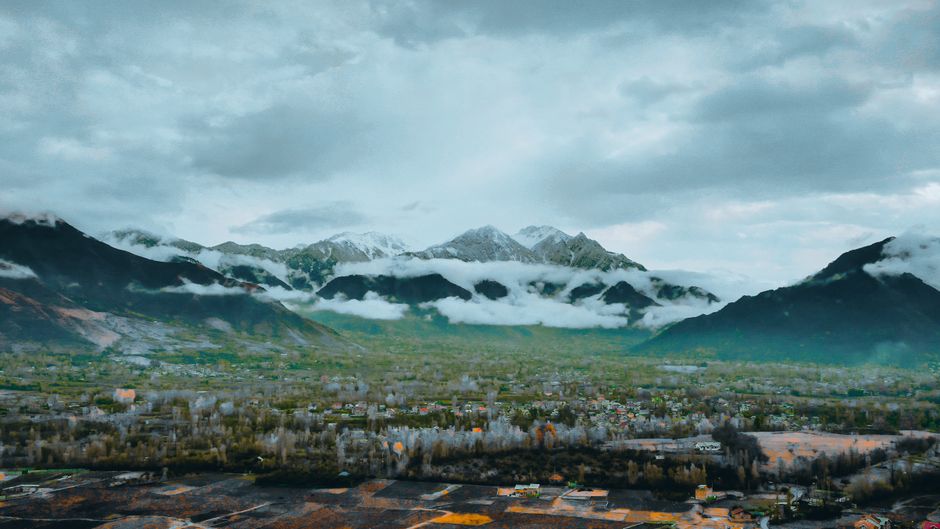
Landscape photography rewards lenses that are sharp across the entire frame, resist flare against bright skies, and render fine detail in distant ridgelines and foliage. While wide-angle zooms get most of the attention, the best landscape kit often spans from ultra-wide to telephoto, letting you isolate distant peaks just as easily as sweeping vistas. This guide covers real, current lens lines across mounts and budgets.
As an Amazon Associate we earn from qualifying purchases. Some links in this article are affiliate links — they don't cost you anything extra.
Here are our picks by category, followed by the optical and practical criteria that separate a good landscape lens from a great one.
What to look for in the best lenses for landscape photography
Prioritise corner-to-corner sharpness, since landscapes fill the whole frame with detail and soft edges show immediately. Look for strong flare and ghosting control because you will often shoot toward the sun, and good filter support via a standard front thread, as polarisers and neutral-density filters are core landscape tools. Bulbous front elements on extreme ultra-wides may require expensive square-filter systems, so check before you buy.
Decide between a zoom and a prime. Zooms like a 16-35mm offer compositional flexibility on a single hike, while primes can deliver a touch more sharpness, lighter weight, and wider apertures for astro work. Aperture matters less for daytime landscapes (you often shoot at f/8 to f/11 for depth of field) but a lot for night-sky photography, where f/2.8 or faster helps.
Best ultra-wide zoom: Sony 16-35mm GM, Canon RF 15-35mm, Nikon Z 14-30mm
An ultra-wide zoom is the classic landscape workhorse. The Sony FE 16-35mm f/2.8 GM II, Canon RF 15-35mm f/2.8L IS, and Nikon Z 14-30mm f/4 S all deliver excellent sharpness and flare resistance. The f/2.8 options double as strong astrophotography lenses, while the Nikon 14-30mm is lighter, more affordable, and accepts standard screw-in filters thanks to its flat front element.
Best standard zoom for versatility: 24-70mm f/2.8 across mounts
A 24-70mm f/2.8, available from Sony, Canon, Nikon, and others, is the most versatile single lens you can carry. It covers moderate wide-angle to short telephoto, handling environmental scenes, intimate details, and the occasional portrait. If you want one lens for a varied trip, this is the safe, high-quality choice.
Best telephoto for compressed vistas: 70-200mm and 100-400mm zooms
Telephotos are underrated for landscapes. A 70-200mm f/4 or f/2.8 compresses layers of mountains and isolates distant subjects, while a 100-400mm reaches even farther for abstract details and wildlife. These lenses transform a scene that looks flat at wide angle into a dramatic, stacked composition.
Best value wide primes and third-party options: Sigma and Tamron
Third-party makers Sigma and Tamron offer outstanding value. Sigma’s Art and Contemporary lines and Tamron’s compact zooms provide sharp, well-built optics at lower prices than first-party equivalents, available for popular mirrorless mounts. For astro and night landscapes, a fast wide prime such as a 20mm or 24mm f/1.4 is a worthwhile addition.
Frequently asked questions
What focal length is best for landscape photography? Wide angles from 14mm to 35mm are most popular for sweeping scenes, but a 24-70mm and even a 70-200mm telephoto are invaluable for versatility and compressed, layered compositions.
Do I need an f/2.8 lens for landscapes? Not for daytime work, where you typically stop down to f/8 to f/11 for depth of field. A fast f/2.8 aperture mainly helps for astrophotography and shooting in very low light.
Are prime or zoom lenses better for landscapes? Zooms offer flexibility on a single outing and are the practical choice for most people. Primes can be slightly sharper and lighter and offer wider apertures, which benefit night-sky photography.
Can I use filters with ultra-wide lenses? It depends on the front element. Lenses with a flat front and standard thread accept screw-in polarisers and ND filters, while bulbous ultra-wides need dedicated square-filter holders, so check before buying.
Are third-party landscape lenses any good? Yes. Sigma and Tamron produce excellent, sharp lenses at lower prices than first-party options, and many landscape photographers use them as their primary glass.
Build your landscape kit around one excellent wide zoom, then add a telephoto when you want to compress distant scenery. Match the filter system and aperture to your shooting style, and your lenses will keep pace with the best views you can find.
🛒 Shop the gear: Browse all lenses in our shop →