
An Argentine wedding looks like a Catholic ceremony from the outside but operates on a different administrative and cultural logic underneath. Civil law treats the Registro Civil de las Personas as the only marriage that creates legal status, the religious service is optional and stands apart, and the celebration that follows is shaped by a strong Italian-Argentine cultural inheritance that touches the food, the music and the tempo of the night. This argentine wedding civil religious photography guide walks through the two-track ceremony structure, the regional variation across Buenos Aires, Córdoba, Mendoza, Rosario and Patagonia, the tango and asado conventions of the reception, and the practical brief that distinguishes a respectful coverage plan from a generic Latin American template.
TL;DR
- The Registro Civil is the only marriage with legal weight — the Catholic parish ceremony, where it happens, is a separate cultural event that does not replace the civil act.
- Roughly 60% of Argentines have Italian ancestry, and that shapes the food, the toasts and the family rhythm more than most photographers realise.
- The asado is not a side dinner — it is the centre of the reception in many regional weddings, and the parrillero (grill cook) deserves a portrait.
- Tango at the reception is selectively chosen, not assumed; outside Buenos Aires it is often a single set rather than the soundtrack of the night.
- Buenos Aires, Mendoza, Córdoba, Rosario and Patagonian destinations each carry distinct photographic conventions for venue, dress and timing.
Why argentine wedding civil religious photography needs its own brief
Argentine couples often hold the civil ceremony at the Registro Civil one or two days before the religious service, then frame the religious service or a symbolic outdoor ceremony as the centrepiece for guests. A photographer who reads the day as one event misses the small, often quietly emotional civil signing entirely. A photographer who reads it as two unrelated events tends to over-cover the civil and under-cover the religious. The right brief covers both as connected acts and treats each on its own visual terms.
The cultural inheritance from Italian, Spanish, German and Lombard immigration also gives an Argentine wedding a tempo that differs from the rest of Latin America. Receptions start late by European standards — typically a 10pm dinner after a 9pm civil-religious blessing — and run until 5am. Photographers planning a single nine-hour day will leave before the most photographically rich moments.
The Registro Civil ceremony: the legal core
The Registro Civil de las Personas runs a short, scripted civil ceremony, generally inside an austere municipal office. The juez de paz (justice of the peace) reads the relevant articles of the Código Civil y Comercial, the couple and two witnesses sign the libro de actas, and the new acta de matrimonio is issued on the spot. The whole act takes 15 to 25 minutes and rarely includes music, decoration or a procession.
The photographic value of this scene is not in production but in family compression. Parents, witnesses and grandparents stand close in the small office, the signatures happen with everyone watching, and the first kiss as a married couple is in front of a state seal rather than a chuppah or an altar. Wide frames of the room, a clean signature shot, the witnesses’ hands on the libro and a single tight portrait of the couple holding the libreta de familia in the corridor afterwards are the non-negotiable frames.
Many couples now choose the celebrante laico option — a civil ceremony delivered by a non-judicial officiant in a venue rather than the registro office. Where this happens, the photographic logic changes: the ceremony becomes the visual centrepiece of the day, and the religious blessing (if held) becomes a smaller second act.
The Catholic parish ceremony: optional but visually central
For families who hold a religious service, the Catholic parish ceremony is held separately from the civil. The structure is a standard Misa de matrimonio — the procession, the rite of consent and exchange of rings, the bendición de las arras (the thirteen unity coins, an Iberian inheritance also seen in Spanish and Mexican weddings), the lazo or velación where it is used, the Eucharist and the firma del libro parroquial.
The bendición de las arras is the photographic moment many international photographers miss. The padrinos hand a small chest of thirteen coins to the priest, who blesses them and passes them between the bride and groom. The frame is intimate and quick — a tight shot of the hands and the coins is the standard. The lazo (a long rosary or floral cord placed in a figure-eight over the couple’s shoulders) appears in some Argentine weddings but is less common than in Mexico; ask in advance.
Argentine parish weddings rarely allow flash and generally restrict movement to the side aisles. A short conversation with the párroco the week before, a willingness to wear dark clothing, and a quiet shutter earn a photographer the latitude to move briefly during the chants.
Italian-Argentine influence: the layer most photographers underread
Approximately six in ten Argentines carry Italian ancestry, with major waves from Lombardy, Piedmont, Calabria, Sicily and the Veneto in the late 19th and early 20th centuries. This is not a flavour layered on top of a Spanish-Catholic core — it is the cultural core for a large portion of Argentine families, and it shapes the wedding day more than the surface conventions suggest.
Practical signs the photographer should expect: an antipasti table at the reception even when it is not labelled as such; multi-course service that runs longer than a North American or British-style dinner; toasts in Italian by older relatives; a small Italian-language song set in the music programme; and a stronger emphasis on long-table seating than on round tables in family-run reception venues. These are visual cues that benefit from quiet documentary frames — the antipasti table being set, the older uncle’s toast at half-volume, the kitchen handover from the parrillero to the dessert team.
Smaller communities of German-Argentine, Welsh-Argentine, Lebanese-Argentine and Eastern European-Jewish families add their own layers. A photographer working a wedding with strong Volga-German heritage in Entre Ríos or a Welsh-Patagonian community wedding in Trelew or Gaiman should ask the family in advance whether traditional dress, music or food will appear and at which point.
The asado, the parrillero and the reception meal
The asado is the central food event of an Argentine reception in most regions. The parrillero — often a hired specialist or a senior male relative — runs a long parrilla with a sequence of cuts that includes chorizo, morcilla, achuras (offal), tira de asado, vacío, bife de chorizo and matambre. The order of cuts, the timing and the conversation around the grill are photographically rewarding in a way that a plated dinner is not.
The right approach is to photograph the parrilla in three passes: an early frame as the fire is set and the chorizo is laid down, a mid-evening frame as the longer cuts come off, and a closing frame of the parrillero with the family. Avoid blocking the smoke line and never hand a camera or lens across the open grill. In Mendocino and Cuyo weddings, the asado is sometimes replaced or supplemented by a horno de barro (clay oven) cordero (lamb) — the same documentary logic applies.
Tango at the reception: selective, not automatic
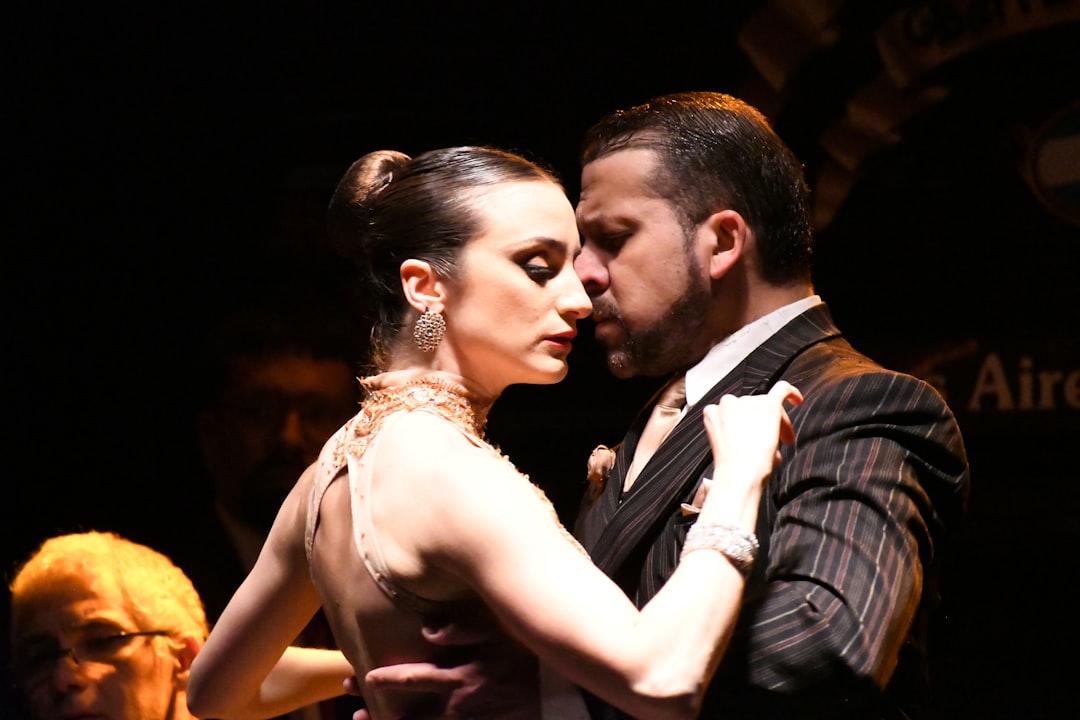
Tango is photogenic and culturally Argentine, but it is not the default soundtrack of every Argentine wedding. In Buenos Aires receptions, a 20 to 30 minute tango set is common, sometimes featuring a hired pareja de tango (couple of professional dancers) for a single show piece. Outside Buenos Aires, tango is more often a respectful nod than a centrepiece — a single song, often during the cocktail hour rather than the main dance floor.
Couples increasingly choose cuarteto (Córdoba), folklore (zamba, chacarera, gato), cumbia or pop sets as the heart of the reception. Photographers should ask the couple in advance which sets are scheduled and plan a low-light dance sequence accordingly. A wide frame, a tight on linked feet for tango or chacarera, and a high-angle frame from the DJ booth or the staircase cover most of the dance-floor needs.
Regional variation: Buenos Aires, Córdoba, Mendoza, Rosario, Patagonia
Argentine weddings vary significantly by region. The headline differences a photographer should know:
Buenos Aires weddings tend toward urban-formal, with venues in Recoleta, Palermo, Puerto Madero and the historic centre. Civil ceremonies are often held at the Palacio de la Legislatura or a city registro, religious services at parish churches like Nuestra Señora del Pilar, and receptions at salones de fiesta or estancias on the periferia. The visual register trends documentary with strong formal portraits and a longer cocktail hour than the rest of the country.
Córdoba and the central provinces lean folklore-heavy, with cuarteto music, sierras-de-Córdoba estancia venues, and a stronger emphasis on the asado. The visual vocabulary includes the rolling hills around La Cumbre, Villa General Belgrano (which carries a German-Argentine heritage layer) and the colonial Jesuit estancias near Alta Gracia.
Mendoza, San Juan and the Cuyo region are the wine-country wedding centre. Bodega weddings at Catena Zapata, Trapiche, Salentein and dozens of mid-sized wineries are now an export market in their own right, drawing couples from Buenos Aires, Chile, Brazil and the United States. Andes-mountain backdrops, vineyard-row portraits and a strong winemaker presence at the reception shape the photographic plan.
Rosario and the Litoral region (Santa Fe, Entre Ríos) carry strong Italian and Volga-German immigrant influences and a Paraná-river-backed venue tradition. Receptions are food-heavy, music-driven and family-anchored. Patagonian weddings — Bariloche, San Martín de los Andes, El Calafate, Ushuaia — are the destination tier; couples fly in extended family for a multi-day mountain or lake celebration with strong outdoor formal sessions and a colder-weather coverage plan.
Dress, music and the visual vocabulary
Most Argentine couples choose Western formal dress with subtle local elements: a bride’s mantilla in some Catholic-traditional families, a groom’s bombacha-and-rastra (gaucho-style) in folklore or estancia weddings, and traditional ponchos or facones at Patagonian and Cuyo weddings. In Welsh-Patagonian community weddings near Gaiman or Trevelin, the bride sometimes carries a small Welsh element — a pin, a hymn, a tea service before the ceremony.
Music selection runs from urban-pop and Latin-pop to folklore, cuarteto, tango, cumbia and (at Italian-heritage receptions) a brief Italian song set. The change of music mood through the night is itself worth photographing — the mid-evening folklore set where older relatives lead the chacarera circle is often a stronger family frame than the formal first dance.
Patagonian destination weddings and the international diaspora
Patagonia has become Argentina’s top destination-wedding region, drawing couples from Buenos Aires, Santiago, São Paulo, Madrid and the Argentine diaspora in Miami, Barcelona and Tel Aviv. Bariloche and the Lake District serve summer weddings (December to March) at lake-edge estancias and mountain hotels. El Calafate and Glaciar Perito Moreno are the secondary destination tier. Photographers in this market should plan for variable mountain weather, longer logistics days, and family travel patterns that compress the celebration into a 48 to 72 hour window.
The Argentine diaspora — particularly in Spain, Israel, Italy, the United States and Mexico — also drives a steady stream of return weddings. Couples fly home for the civil ceremony at the Argentine consulate or at the Registro Civil in Buenos Aires, then hold the religious service and reception in Argentina. The photographic logic is similar to other diaspora wedding contexts: compress the two cultural layers, lean documentary on the host-country civil if any, and treat the Argentine event as the photographic centre.
Decision aid: an Argentine wedding coverage checklist
| Stage | Required frames | Notes |
|---|---|---|
| Civil ceremony (Registro Civil) | The libro de actas signing, the witnesses’ hands, the kiss after the juez declares the marriage, the libreta de familia in the corridor | Often held one to two days before the religious service; budget two hours of separate coverage |
| Religious service (Catholic parish) | Procession, exchange of rings, bendición de las arras, lazo if used, Eucharist, firma del libro parroquial | Confirm flash and movement rules with the párroco; many parishes restrict the photographer to the side aisles |
| Cocktail hour | Antipasti table being set, the parrillero starting the fire, family arrivals, the first toast | Italian-Argentine antipasti is a documentary frame, not a step to skip |
| Asado and dinner | The parrilla in three passes (early chorizo, mid-evening tira, closing portrait of the parrillero), long-table seating wides, family toasts | Never block the smoke line; treat the parrillero with the same care as a featured guest |
| Reception sets | First dance, tango set if scheduled, folklore or cuarteto set, cumbia/pop main floor, the carrousel and recuerdos at the end | Plan for a 5am close — short-day coverage misses the most photographically rich block |
Pricing context for Argentina and the diaspora
Argentine wedding photography pricing has been volatile through the recent economic cycle, with USD-pegged international photographers and ARS-only domestic photographers operating at very different price points. In 2026, full-day coverage by a strong Buenos Aires, Mendoza or Bariloche photographer lands roughly USD 1,500 to USD 9,500, with album options on top. Cuyo bodega and Patagonian destination weddings sit at the upper end. Diaspora bookings — particularly Argentine couples returning from Spain, Israel or the United States — typically pay in USD and bring a separate travel and accommodation line. The broader pricing logic for venue, season and team size is covered in our average wedding photography pricing pillar.
Working with the family, the priest and the parrillero
The single most useful pre-wedding step is a 30-minute conversation with the couple, ideally with one or both sets of parents present, to map the day across the civil, religious and reception layers. A photographer who has read the structure correctly, asked one or two specific questions about the parish and the parrillero, and shown a willingness to stay through the late night earns latitude on the day.
Argentine families also appreciate a photographer who can pronounce the names and roles correctly. Registro Civil, juez de paz, libreta de familia, padrinos, arras, lazo, parrillero, asado, chacarera, cuarteto. None of these are difficult, and using them naturally in conversation signals that the photographer has done the work.
Closing
Argentine wedding photography rewards photographers who treat the two-track civil-religious structure with equal seriousness, who read the Italian-Argentine cultural layer correctly, and who plan for a late, food-and-music-heavy reception that is the visual heart of the day. Couples planning an Argentine wedding can start with our wedding photographers hub and the how to choose a wedding photographer decision guide, then work through the wedding photography styles overview and the average wedding photography pricing pillar to set a realistic brief and budget. A broader cultural-photography reading list lives at the Tov Studio guides hub for couples comparing traditions across the Argentine, Chilean, Peruvian and Brazilian wedding worlds.