
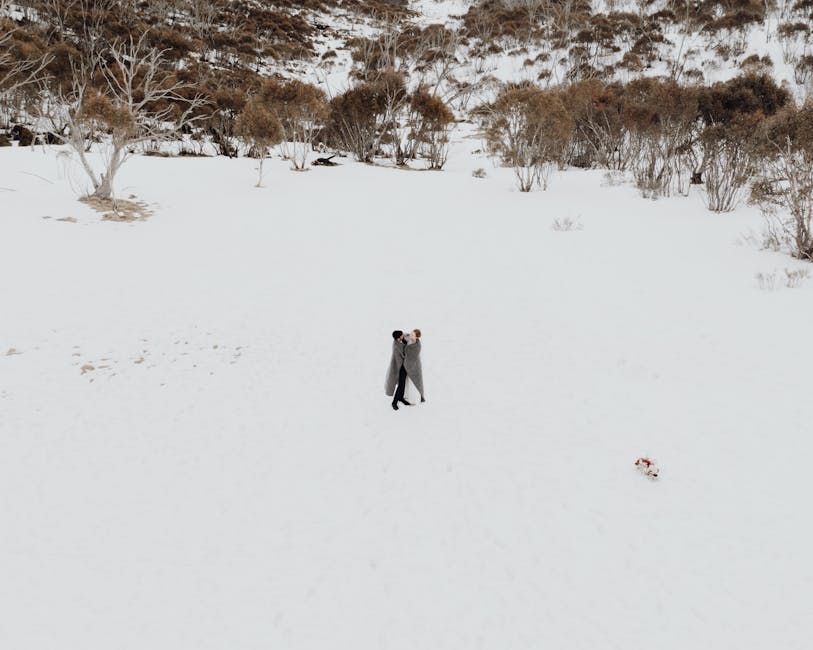
Eloping looks simple from the outside — two people, a license, a beautiful place — but a surprising number of details sit underneath a good elopement day. This elopement planning guide walks through the full stack: legal requirements by state, ceremony structure, photography logistics, permits, timing, and the small-ceremony choices that actually shape how the day feels. If you want a compact checklist version, skip to the related guide linked below.
TL;DR
- Every elopement is still a legal marriage — you need a valid license, a qualified officiant, and (usually) two witnesses.
- Marriage license rules vary by state: waiting periods, residency, ID requirements, and witness counts all differ.
- Public land ceremonies almost always require a Special Use Permit. Apply 60+ days ahead for national parks.
- Budget four to six months for planning a destination elopement; six to ten weeks for a local one.
- A good elopement photographer doubles as logistical support — many do first-look, hike, ceremony, and portrait coverage in one package.
How this elopement planning guide defines an elopement in 2026
The word has moved. Historically an elopement meant running off — no guests, no announcement, often no family knowledge. Today, most couples use the term to mean an intentionally small ceremony, usually under 15 people, often outdoors, with a strong focus on the ceremony itself rather than reception logistics. Whether that’s a pair of hikers on a ridge or a couple with their parents on a San Francisco rooftop, the planning work is similar.
The legal side, however, hasn’t moved at all. An elopement is a wedding. The license, officiant, and witnesses all need to comply with the state’s marriage statutes.
Legal steps: marriage license by state
Every US state issues marriage licenses through county clerks. The requirements differ enough that you can’t assume your home state’s rules apply in the state where you plan to elope. The key variables:
Residency: most states don’t require residency, but a few do — notably certain New York and Wisconsin counties have extra paperwork for out-of-state couples.
Waiting period: some states issue the license and the ceremony can happen the same day. Others require a 1 to 6 day waiting period between license issuance and ceremony. Wisconsin is six days; Illinois is one. Hawaii and Nevada are same-day, which is why so many destination elopements land there.
Expiration: licenses expire anywhere from 30 days to a year after issuance. Oregon is 60 days. Colorado is 35 days. Plan the trip so your license window is still open on the ceremony date.
Witnesses: most states require two adult witnesses. A handful allow self-uniting or self-solemnized marriages — Colorado, Pennsylvania, Wisconsin, and Washington DC — which is a practical choice if you’re truly eloping alone.
ID requirements: government-issued photo ID is standard. Some counties require proof of dissolution if either party was previously married (divorce decree or death certificate).
Confirm the current rules directly with the county clerk’s office. Clerk websites update faster than third-party summaries.
Picking the location
Three categories of elopement location, each with its own planning overhead:
Public land — national parks, state parks, BLM land. These are the classic elopement backdrops: Yosemite, Zion, Glacier, Acadia, the Columbia River Gorge. Every national park requires a Special Use Permit for weddings, usually with a capped guest count, designated ceremony sites, and timing restrictions. Apply through the park’s permit office at least 60 days in advance. State parks are often simpler but still require a permit.
Private land or venue. Small venues, family properties, farms, and boutique hotels. No permit required, but you need written permission from the owner and potentially a rider on their liability insurance.
Courthouse or city hall. San Francisco City Hall is a well-known example — a beautiful civil ceremony venue with a short appointment slot. You get limited time (typically 6 minutes inside the rotunda), but the building is a venue in its own right. San Francisco is one of the strongest urban elopement backdrops and many couples pair a City Hall ceremony with a short photo tour of the building and neighborhood. Browse San Francisco elopement photographers to see how this is typically structured.
Photography: why elopement coverage is different
Elopement photography is not a scaled-down wedding shoot. The coverage window is different, the ceremony is often under 20 minutes, the light is whatever the location gives you, and the photographer is often also helping you find the trail, time golden hour, and set up first-look moments. Good elopement photographers work like guide-plus-photographer hybrids.
What to look for when booking:
Local knowledge: the photographer should know the permit process, the hike time, the sunset timing for every season, and alternate locations if weather cancels the primary spot. In the Pacific Northwest, that matters enormously — you can check out how it plays in practice by browsing Portland elopement photographers. In the Rockies, the same logic applies; see Denver mountain elopement photographers for how altitude and weather drive scheduling.
Hiking and fitness: if your ceremony is at the end of a 4-mile hike, the photographer carrying gear to that spot needs to be physically up for it. Ask.
Package structure: elopement packages typically include 4 to 10 hours of coverage, a first-look window, ceremony coverage, portraits, and a delivered gallery. Some include an engagement session, officiant services, or a small assistant for hair and makeup touch-ups. For a broader decision framework, how to choose a wedding photographer covers style, contract terms, and pricing approach that apply to elopement bookings too.
A sample elopement day timeline
Here’s a common shape for a full-day mountain or coastal elopement:
7:00 AM: photographer arrives at accommodation for getting-ready coverage. Hair and makeup wraps during this window.
9:00 AM: first look or letter-reading moment on property or nearby.
10:00 AM: drive or hike to ceremony location. Allow extra time for gear setup.
12:00 PM: ceremony. Officiant, vows, rings, signing the license. Plan 20 to 45 minutes.
12:45 PM: couple portraits at ceremony location.
2:00 PM: break, lunch, optional second-location move.
4:00 PM: second portrait session, golden hour or blue hour.
6:00 PM: small dinner, either at a restaurant or a private chef setup.
This compresses nicely for a half-day version: meet at 2 PM, ceremony at 4 PM, portraits through sunset, wrap by 8 PM.
Vendor stack for a small elopement
Most elopements use a lean vendor stack: photographer, officiant, and hair-makeup if needed. Optional additions depending on scale:
Videographer (often a second shooter on the photography contract), florist for a bouquet and boutonnière, private chef or small-group catering for dinner, a hair and makeup artist who travels, and a luxury rental for any transportation or getting-ready location. Skip the DJ, the wedding planner (the photographer often fills that role), and the large reception infrastructure.
Permits, insurance, and the boring-but-important stack
Permits are the most commonly missed piece. Here’s the short version:
National parks: Special Use Permit, $50 to $300, apply 60+ days out, capped guest counts per site, designated ceremony locations only.
State parks: varies by state. Oregon State Parks require a permit for events of 20+ or any commercial photography. California State Parks use a similar model. Search the specific park’s website.
City parks: most require a permit for events of any size. San Francisco, Central Park, and Lincoln Park all have published permit forms.
Beaches: coastal beaches are often state or municipal; check. Hawaii in particular requires a beach wedding permit.
Liability insurance: some venues and permit offices require a one-day event insurance policy. Policies typically run $100 to $200 for a small elopement.
The pre-ceremony legal checklist
Two to four weeks before the ceremony, confirm:
License obtained from the correct county, inside the expiration window. Officiant confirmed as legally recognized in that state (some states don’t accept online ordinations; verify). Two witnesses confirmed, or self-uniting paperwork prepared if the state allows it. ID documents confirmed. Any required waiting period calculated from the license pickup date. A plan for returning the signed license to the county clerk after the ceremony — this is what makes the marriage legally recorded.
For a more granular pre-day checklist covering non-legal items too, see our elopement day checklist.
Budget ranges
Elopement budgets fall into rough tiers. A courthouse elopement with a photographer for two hours runs $500 to $1,500 total. A local outdoor elopement with a 4-hour photo package, officiant, flowers, and dinner runs $3,000 to $8,000. A destination elopement with travel, lodging, a full-day photo team, permits, and a private chef dinner runs $8,000 to $20,000. Even the upper end is usually less than a median US wedding.
Closing
An elopement trades scale for intent. The planning is lighter than a 150-person wedding, but it’s not no-planning — the legal requirements are identical, the permits are real, and the photographer you hire is often the person holding the day together. Pick a photographer who knows the location and the paperwork, handle the license mechanics early, and the ceremony itself will feel more like a day off than a production. For broader context on the full wedding and elopement landscape, the wedding photography hub covers how different ceremony styles compare on pricing, timing, and vendor mix.