
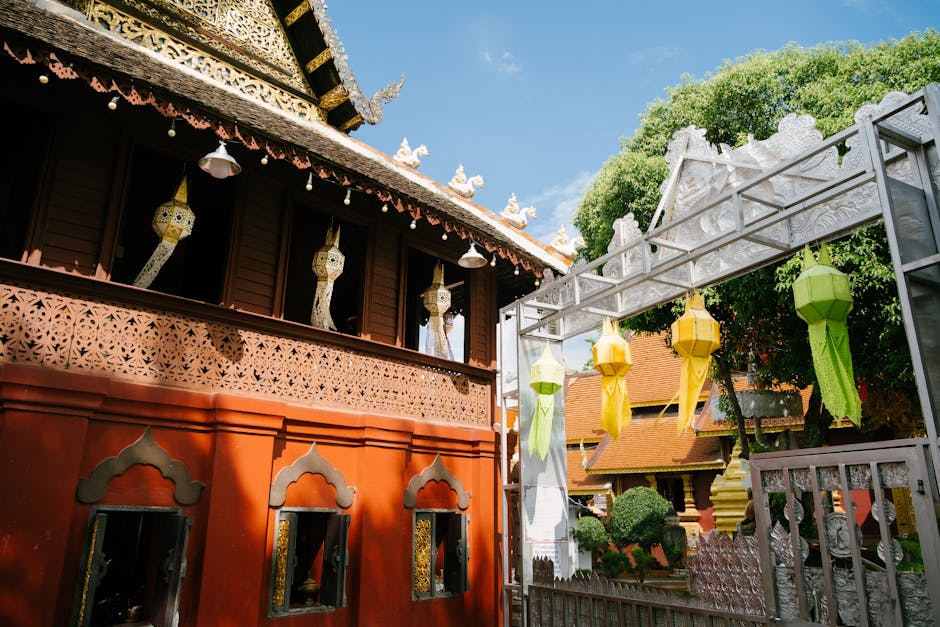
This guide to chiang mai pre-wedding photography covers the context, locations or traditions, a practical plan, gear and logistics, and pricing — everything you need to plan a shoot or hire the right photographer.
Why Chiang Mai
Northern Thailand’s cultural capital offers golden temples, misty mountains, and the magical Yi Peng lantern festival — a serene, atmospheric alternative to Thailand’s beaches. Set in a mountain-ringed valley, the city has a slower, gentler rhythm than the coast or the capital, and that calm shows in pre-wedding pictures: softer light, quieter backdrops, and a sense of place rooted in craft and devotion rather than resort glamour. For couples who want imagery built on culture, texture and atmosphere — gilded rooftops, weathered brick, lantern light and forested hills — Chiang Mai delivers a look that feels distinctly its own.
Best locations
The old-city temples (Wat Chedi Luang, Wat Phra Singh), Doi Suthep on the mountain, and the surrounding rice fields and hills. The Yi Peng lantern festival (around November) is extraordinary. Each setting offers a different register: the old-city temples give you ornate detail, gold leaf and centuries-old brick at close range; Doi Suthep adds elevation and sweeping valley views along with its terraces and stupa; and the rice fields and hills outside town provide open, green, natural frames that contrast beautifully with the temple architecture. Building a route that moves from the walled old city outward to the countryside lets a single session tell a layered story without long drives between very dissimilar looks.
Temple etiquette
Temples are active places of worship — dress modestly, remove shoes where required, and follow rules; some restrict or charge for photo shoots. A local photographer arranges access. Shoulders and knees should be covered, voices kept low, and you should never pose with your back to or feet pointed at a Buddha image. Monks and worshippers always take priority over the shoot, so patience and a respectful, low-key presence go a long way. Because policies vary from temple to temple and can change, working with a photographer who knows current rules, fees and the quieter corners is the surest way to capture beautiful frames without causing offence or being turned away.
Timing
The cool, dry season (November–February) is best; Yi Peng’s lantern release is a once-a-year spectacle worth planning around. These months bring clearer skies and more comfortable temperatures, ideal for moving between temples and the mountain. Early mornings are golden for the old city — soft light on the brick and far fewer visitors — while late afternoon warms the temple rooftops and suits the hillside and rice-field locations. If the lantern festival is your goal, book well ahead, as accommodation and photographers fill quickly around that window; note too that air quality can decline later in the dry season during the regional burning period, which is worth checking when you set a date.
Booking
Pair with a Chiang Mai photographer — start with wedding photographers in Chiang Mai. Look for someone with a temple-shoot portfolio who can advise on permits, modest styling and a sensible route, and confirm coverage hours, travel between sites, the number of edited images and turnaround in writing before you commit. Sharing a few reference frames you love helps align expectations on style.
What to expect and how to prepare
A Chiang Mai pre-wedding shoot tends to reward patience and a respectful pace over a packed itinerary. Expect early starts to catch soft light and quiet temples, a fair amount of walking on temple grounds and uneven ground, and the heat building noticeably through the morning, so comfortable footwear, water and sun protection all help. Styling matters here: outfits should respect temple dress codes — covered shoulders and knees — while still photographing beautifully against the gold and brick, and bringing a wrap or change of clothing lets you move between sacred and secular settings without compromise. Detail moments are part of the story too, from incense and offerings to the texture of carved doors and weathered murals, and if you are shooting around the lantern festival, the warm glow of lantern light against the night sky becomes the defining frame. Discuss with your photographer how to balance the serene temple imagery with the lush outdoor settings so the gallery has range. Above all, remember that these are living places of worship: moving calmly, keeping your voice low, yielding to monks and worshippers, and following any guidance from temple staff not only keeps you welcome but also creates the unhurried space in which the most natural, atmospheric pictures happen. A little flexibility with timing and locations, trusted to a knowledgeable local photographer, almost always pays off.
Frequently asked questions
Lantern festival? Yi Peng, around November. Temple dress? Modest, shoes off. Best season? November–February. Can we shoot inside temples? Often yes, but rules and fees vary — let a local photographer arrange access. How many locations in a day? Two to three is realistic given travel and the heat.