
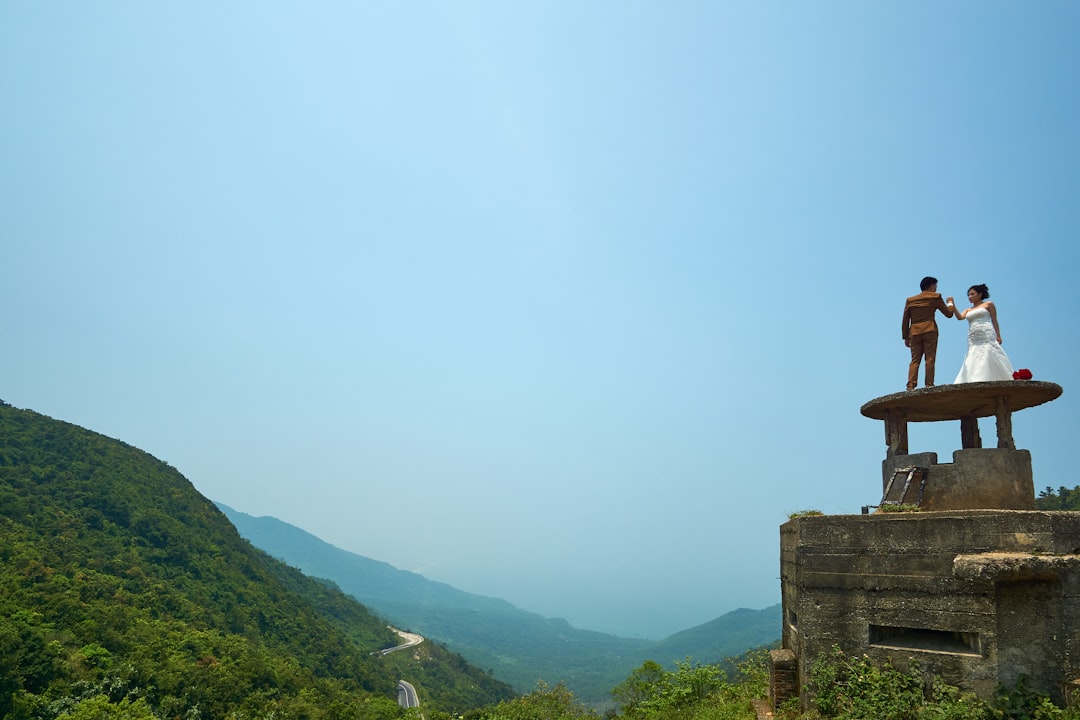
Looking for the best wedding photographers in Vietnam in 2026 means understanding that the country has two meaningfully different wedding photography markets. The north, anchored by Hanoi and Ha Long Bay, leans traditional, with tea ceremonies, ao dai portrait days, and smaller family-focused ceremonies. The south, anchored by Ho Chi Minh City, the Mekong Delta, and Phu Quoc Island, leans more Western, with ballroom receptions and a growing destination wedding scene. This guide covers both, with realistic pricing, cultural context, and how to build a shortlist that matches the wedding you actually want.
Vietnamese wedding photography has grown fast in the last five years. Local photographer quality is high, and pricing remains meaningfully below comparable Thai, Korean, or Japanese markets. Destination couples travelling in from Australia, Singapore, and North America make up a growing share of premium bookings.
TL;DR
- Full-day coverage runs VND 15M to VND 60M (roughly USD 600 to USD 2,400) depending on tier and city.
- Destination packages with imported photographers run USD 2,500 to USD 5,500.
- North (Hanoi) leans traditional; south (HCMC) leans Western. Most weddings include a tea ceremony regardless.
- Dry season is November to April. January can be cold in the north; plan accordingly.
- Ao dai pre-wedding portrait days are a near-universal addition for Vietnamese couples.
Ho Chi Minh City and the south
Ho Chi Minh City is the largest wedding photography market in Vietnam. Saigon weddings skew toward larger ballroom receptions at hotels like the Rex, the Majestic, and modern banquet halls in District 1, District 7, and Thu Duc. Photographers here handle a mix of tea ceremonies at family homes, Western-style ceremonies at hotels, and pre-wedding portrait days in Districts 1, 2, and 3. For venue-level detail and pricing tiers, read the Ho Chi Minh City wedding photographer market overview.
Outside the city, the Mekong Delta and Phu Quoc Island are the two key destination sub-markets. Phu Quoc in particular has grown into Vietnam’s beach wedding capital, with resorts along the west coast hosting destination couples from January through March.
Hanoi and the north
Hanoi is Vietnam’s second wedding photography market but the cultural heart of the country’s traditional wedding industry. The city’s Old Quarter, the Temple of Literature, West Lake, and the lanes around Hoan Kiem Lake provide the default backdrop for ao dai pre-wedding shoots. Weddings in Hanoi lean traditional, with strong emphasis on tea ceremonies, family rituals, and a more measured pace than Saigon’s ballroom format. See the Hanoi wedding photographer scene overview for local context.
Ha Long Bay is the north’s main destination sub-market. Photographers travel out from Hanoi for a day or overnight to cover ceremonies aboard cruise boats or at resorts on Tuan Chau Island and Cat Ba.
Regional pricing at a glance
| Market | Local tier (full day VND) | USD equivalent | Peak months |
|---|---|---|---|
| Ho Chi Minh City | 20M – 60M | $800 – $2,400 | Dec – Mar |
| Hanoi | 15M – 50M | $600 – $2,000 | Oct – Dec, Mar |
| Phu Quoc | 25M – 70M | $1,000 – $2,800 | Jan – Mar |
| Da Nang / Hoi An | 20M – 55M | $800 – $2,200 | Feb – Apr |
Cultural context: ao dai, tea ceremony, and religious traditions
Ao dai pre-wedding shoot. Nearly universal among Vietnamese couples. The bride wears a bespoke ao dai, often in red for tradition or pastel tones for softer editorial work. Hanoi shoots frequently use the Temple of Literature, Bach Ma Temple, or the old lanes of the Old Quarter. Saigon shoots use the Central Post Office, Notre-Dame Cathedral exterior, and tree-lined streets in District 3.
Tea ceremony. The central traditional ritual, held at the bride’s family home in the morning and sometimes the groom’s home afterwards. Couples serve tea to elders in a structured sequence. Photographers cover portraits of each family group, close-ups of the ritual objects (betel leaves, red envelopes, tea cups), and candid moments between generations. This is where the day’s cultural weight sits.
Buddhist elements. Buddhist blessings and altar rituals appear in many tea ceremonies, especially in the north. Dedicated Buddhist wedding ceremonies at pagodas are less common but photograph beautifully.
Catholic ceremonies. Common in parts of southern Vietnam, especially among families from Saigon’s long-established Catholic communities. Typically held in parallel with a tea ceremony rather than as a replacement.
Modern Western reception. Large hotel ballroom receptions with a first dance, cake cutting, and toasts are the dominant evening format, especially in Ho Chi Minh City. Photographers often shift to a more editorial style in this block.
Seasonal timing
Dry season south (November to April). Reliable weather for Ho Chi Minh City, Mekong, and Phu Quoc. January through March is peak for Phu Quoc destination weddings.
Dry season north (October to March). Cooler and drier, with occasional cold snaps in January. Late October through early December is the most photographed Hanoi window. Plan ao dai portraits for morning light before winter fog sets in.
Shoulder (April and May in the north, September and October in the south). Lower pricing but higher weather risk.
Rainy season (May to October in the south, June to September in the north). Afternoon thunderstorms dominate. Discounts of twenty to thirty percent are common but outdoor shoots carry real risk.
How to pick a Vietnamese wedding photographer
Use this sequence to build a strong shortlist.
- Match the photographer to the region. A Saigon ballroom specialist and a Hanoi tea ceremony specialist are rarely the same person.
- Request two full recent galleries. Tea ceremony, ao dai portrait, and reception coverage should all be present.
- Confirm cultural fluency. The photographer should know the rhythm of a Vietnamese tea ceremony without being coached through it.
- Check language and coordination. Bilingual contracts for international couples; clear deliverables regardless.
- Verify travel handling. Phu Quoc, Ha Long Bay, and Hoi An shoots usually involve flights and overnights.
- Delivery and editing. Timeline, file counts, print release, and album pricing should all be explicit.
Our broader how to vet a wedding photographer guide covers contract clauses and red flags that apply internationally.
Local vs. imported photographers
For Vietnamese ceremonies, local photographers almost always produce stronger work. Tea ceremonies, ao dai portrait days, and hotel receptions in Saigon all carry specific rhythms that a Bangkok or Singapore-based photographer will usually miss. Imported photographers work best for secular symbolic ceremonies or when a destination couple is bringing their trusted home photographer for continuity across multiple shoots.
Cost-wise, imported coverage runs fifty to one hundred percent higher than equivalent local packages once travel and accommodation are included. For broader city-by-city comparisons across Asia and globally, browse our global wedding photographer directory.
Putting it together
A realistic Vietnam wedding photography plan for 2026 starts with geography. For a Ho Chi Minh City wedding, start with the Ho Chi Minh City wedding photographer market overview and shortlist three local studios. For a Hanoi wedding, start with the Hanoi wedding photographer scene guide. Destination couples planning a Phu Quoc or Ha Long Bay wedding should shortlist photographers based in the nearest major city (HCMC for Phu Quoc, Hanoi for Ha Long Bay) and include travel in the package from the start.
Book nine to twelve months ahead for dry-season Saturdays, especially in January through March for Phu Quoc and October through December for Hanoi. Bundle a separate ao dai portrait day where possible; it is inexpensive relative to the rest of the wedding and produces the imagery many Vietnamese couples value most.
Two logistical notes matter more in Vietnam than in most regional markets. First, confirm how the photographer handles tea ceremony coverage — some teams treat it as a separate session billable on its own, others bundle it into the full-day rate. Second, ask for sample raw-to-edited turnaround windows in writing; forty to eighty edited highlights within two weeks is the local standard, with the full gallery arriving four to six weeks later. Lock these points into the contract to keep the post-wedding experience predictable.
Some links in this article are affiliate links. Platform affiliate links do not cost you anything extra.
As an Amazon Associate we earn from qualifying purchases. Some links in this article are affiliate links — they don't cost you anything extra.