
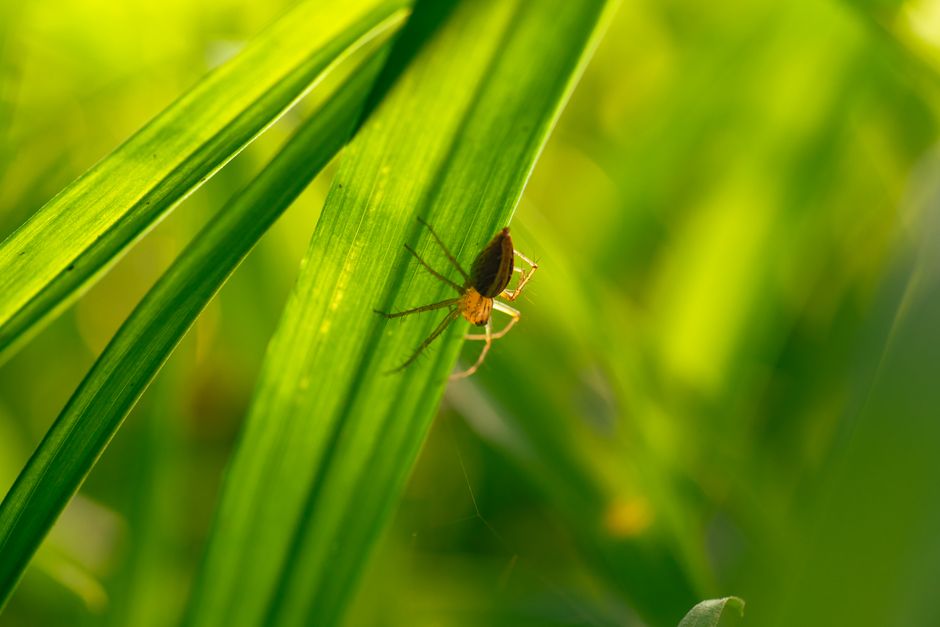
Shooting at life-size magnification opens a world most photographers never see: the texture of a petal, the compound eye of a dragonfly, the sparkle on a wedding ring. But getting there takes a dedicated lens. In this guide to the best macro lenses, we walk through the focal lengths, magnification ratios, and stabilization features that actually matter, then highlight proven options from Canon, Nikon, Sony, Sigma, and Laowa for every system and budget.
As an Amazon Associate we earn from qualifying purchases. Some links in this article are affiliate links — they don't cost you anything extra.
Editor’s pick for the best macro lenses
If you shoot Sony E-mount, the Sony FE 90mm f/2.8 Macro G OSS is our overall pick. It delivers genuine 1:1 reproduction, a comfortable working distance for skittish subjects, and Optical SteadyShot that helps when you are handholding at close range. For Canon RF users, the Canon RF 100mm f/2.8L Macro IS USM is the equivalent flagship, and Nikon Z owners get the excellent NIKKOR Z MC 105mm f/2.8 VR S. All three hit life-size magnification and double as superb portrait lenses.
What to look for in a macro lens
Magnification ratio is the headline spec. A true macro lens reaches 1:1, meaning the subject projects onto the sensor at actual size. Some lenses labeled macro only reach 1:2 (half life-size), which is fine for flowers but limiting for tiny insects. Laowa and a few specialty optics push beyond 1:1 to 2x or 5x for extreme work.
Focal length changes your working distance. A 50-60mm macro forces you very close to the subject, which can block light or scare insects. A 90-105mm gives more breathing room and is the most versatile choice. Longer 150-200mm macros let you shoot live subjects from a comfortable distance but are heavier and pricier.
Stabilization matters more in macro than almost any other genre because tiny movements are magnified. In-lens IS or VR, combined with in-body stabilization on modern mirrorless bodies, makes handheld close-ups far more achievable. Also weigh aperture: f/2.8 is standard, but depth of field is razor-thin up close, so you will often stop down to f/8-f/16 anyway.
The best macro lenses for every budget
Best overall (short telephoto): The Canon RF 100mm f/2.8L Macro IS USM, Nikon NIKKOR Z MC 105mm f/2.8 VR S, and Sony FE 90mm f/2.8 Macro G OSS are the gold standard for their systems. They balance reach, working distance, and image quality, and they make flattering portrait lenses too.
Best value third-party: The Sigma 105mm f/2.8 DG DN Macro Art brings 1:1 magnification and strong optics at a friendlier price for Sony E and L-mount. The older Sigma 70mm f/2.8 DG Macro Art is also revered for clinical sharpness.
Best for crop-sensor and beginners: The Canon RF-S 35mm Macro and classic Nikon AF-S DX 40mm Micro are affordable ways to start, though they reach 1:2 to near 1:1 with short working distances. The Tamron 90mm f/2.8 Di III Macro VXD is a great mid-range step up.
Best for extreme magnification: The Laowa 100mm f/2.8 2x Ultra Macro and Laowa 25mm f/2.8 2.5-5x Ultra Macro let you go beyond life-size for jewelry, eyes, and insect detail. They are manual-focus, which suits the deliberate pace of high-magnification work.
Best long-reach macro: The Sigma 150mm f/2.8 APO Macro (DSLR mounts) and Canon EF 180mm f/3.5L Macro remain favorites for photographing live insects and reptiles from a safe distance.
Buying considerations
Think about how you will light your macro subjects. At 1:1 you often need a dedicated ring flash or twin macro flash, plus a focusing rail and a sturdy tripod for studio-style precision. Budget for these accessories alongside the lens. Also confirm the lens covers your sensor format: a full-frame macro works on a crop body (with a tighter field of view), but a crop-only lens will vignette on full frame.
Finally, remember that a quality macro lens is rarely a single-use purchase. Most 90-105mm macros are razor-sharp wide open and make outstanding portrait and product lenses, so the investment pays off even on days you are not chasing bugs.
Macro lens FAQ
What magnification makes a lens a true macro? A true macro reaches 1:1, reproducing the subject at life size on the sensor. Lenses that only reach 1:2 are still useful for flowers but are technically half-macro.
What focal length is best for beginners? A 90-105mm macro is the sweet spot. It offers a comfortable working distance, doubles as a portrait lens, and is easier to light than a very short macro.
Do I need image stabilization for macro? It helps a lot for handheld close-ups because small shakes are magnified, but for studio work on a tripod it matters less. Pairing in-lens IS with in-body stabilization is ideal.
Can I use extension tubes instead of a macro lens? Extension tubes let a regular lens focus closer for cheap, but you lose infinity focus and some light, and image quality is usually below a dedicated macro lens.
Why is my macro photo only sharp in a tiny sliver? Depth of field is extremely shallow at high magnification. Stop down to f/8-f/16, or use focus stacking, where you combine multiple frames focused at different depths.
🛒 Shop the gear: Browse all lenses in our shop →